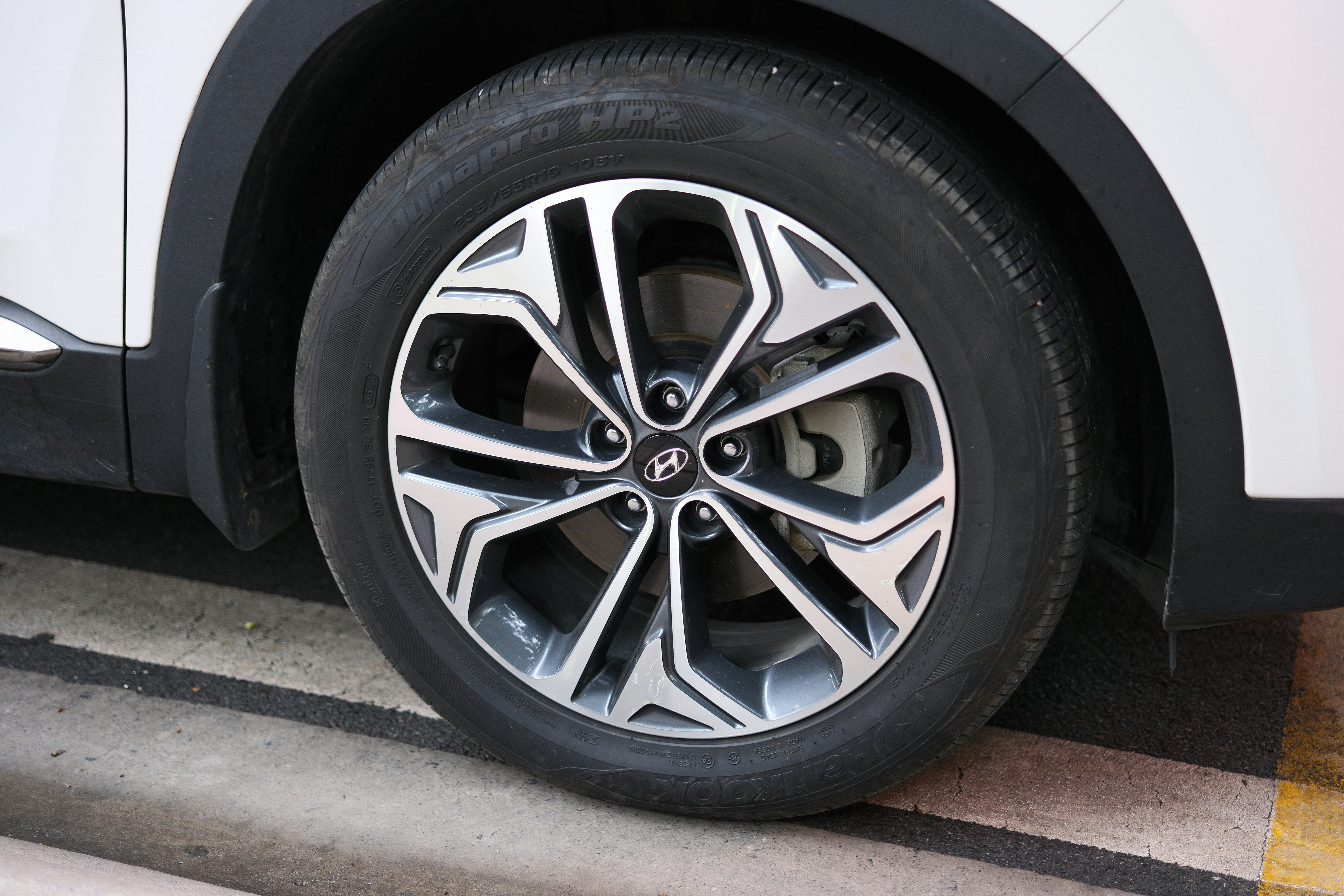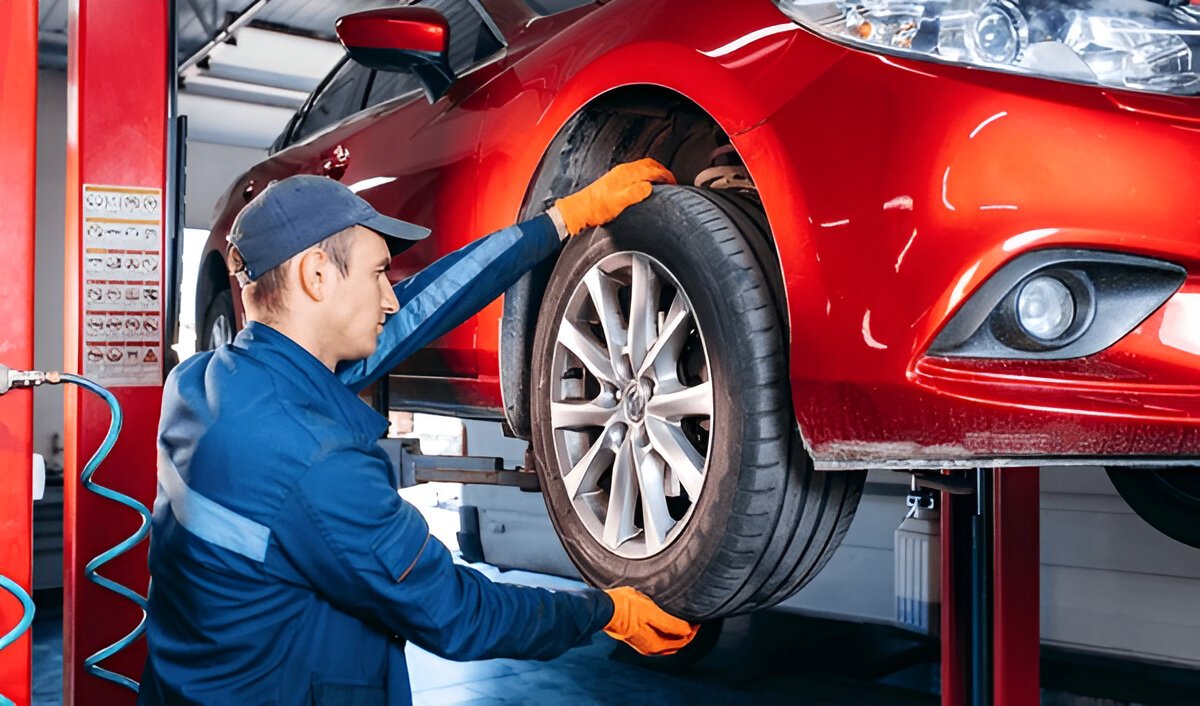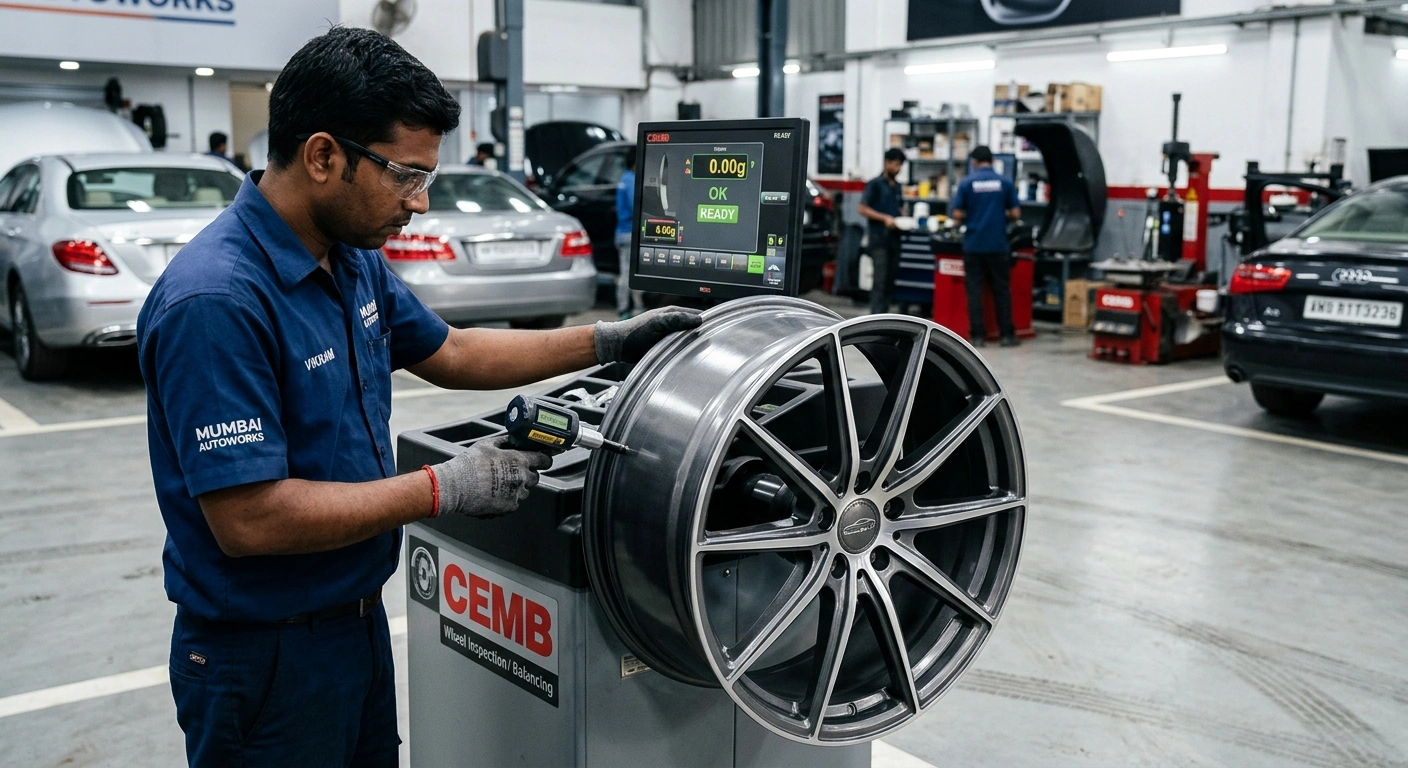
A damaged mag wheel does not always show obvious signs of trouble. You may inspect the wheel and see no cracks, broken sections, or major dents, yet your vehicle may still experience vibration, uneven tyre wear, air pressure loss, or poor handling.
This happens because some wheel damage occurs in areas that are difficult to see during a normal visual inspection. A wheel can become slightly bent, develop runout, or suffer bead-seat deformation without showing a dramatic crack.
For Mumbai drivers, potholes, uneven roads, road construction, speed breakers, and accidental kerb impacts can put significant stress on wheels. This is why professional Mag Wheel Damage Repair may sometimes be necessary even when the damage is not immediately visible.
Yes. A mag wheel can require repair even without visible cracks. Hidden bends, wheel runout, bead-seat damage, balancing problems, and impact deformation can affect tyre performance and vehicle handling.
What Is a Mag Wheel?
Mag wheels are commonly used to describe lightweight alloy wheels made from aluminium or other alloy materials. They are popular because they can improve the appearance of a vehicle while offering a good balance between weight, strength, and performance.
Although modern alloy wheels are designed to withstand normal road conditions, they are not immune to impact damage.
A strong impact can change the shape of the wheel without creating a visible crack. The damage may only become noticeable when the vehicle is driven or when the wheel is tested using professional equipment.
Why Can a Wheel Need Repair Without a Crack?
A crack is only one type of wheel damage. There are several other problems that can affect a mag wheel.
Common examples include:
- Bent wheel edges
- Radial runout
- Lateral runout
- Bead-seat deformation
- Minor dents
- Wheel imbalance
- Corrosion around the bead area
- Distortion caused by pothole impacts
- Damage around the mounting surface
Some of these problems may be almost impossible to identify by simply looking at the wheel.
This is why a professional inspection is more reliable than a visual check alone.
No visible crack does not necessarily mean the wheel is healthy. A wheel can be structurally or dimensionally damaged while appearing normal from the outside.
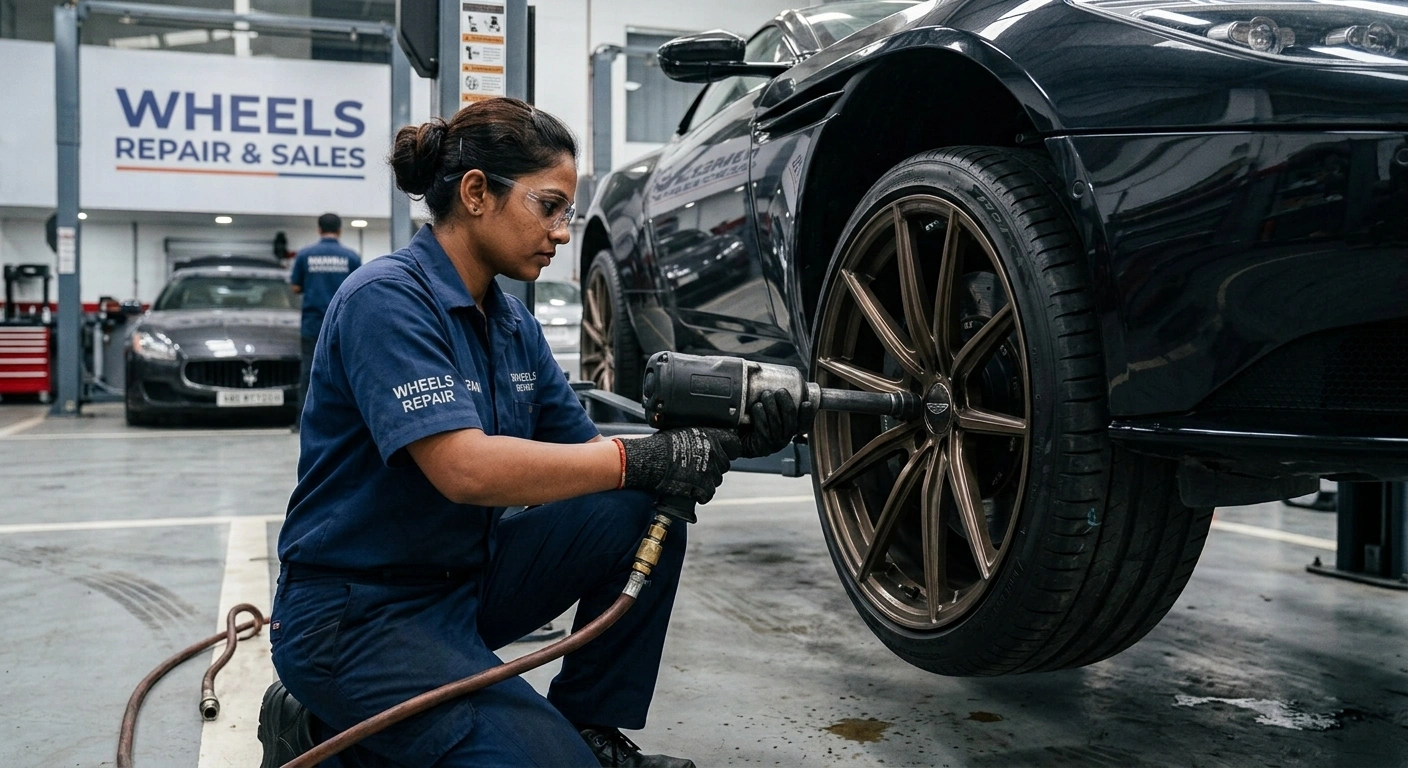
1. A Bent Rim Can Be Difficult to See
One of the most common forms of hidden wheel damage is a slight bend.
When a vehicle hits a pothole or hard road edge, the force can deform part of the wheel. The bend may be small enough that it cannot be detected easily with the naked eye.
However, even a minor deformation can affect how the tyre rotates.
You may notice:
- Steering vibration
- Vehicle vibration at certain speeds
- Uneven tyre wear
- Difficulty balancing the wheel
- Repeated tyre pressure loss
If these symptoms appear after an impact, professional Mag Wheel Damage Repair may be worth considering even when there is no visible crack.
2. Wheel Runout Can Affect Driving Comfort
Wheel runout refers to how much a wheel deviates from its intended circular or straight path while rotating.
There are two important types:
Radial Runout
Radial runout occurs when the wheel moves slightly up and down as it rotates.
Lateral Runout
Lateral runout occurs when the wheel moves from side to side during rotation.
Both conditions can cause vibration and uneven tyre movement.
A technician can use specialised equipment to measure wheel runout and determine whether the wheel remains within acceptable limits.
3. The Tyre Bead Area May Be Damaged
The tyre does not simply sit on the wheel. It forms an important airtight seal around the wheel’s bead seat.
If this area becomes deformed after an impact, the tyre may not seal properly.
This can lead to:
- Slow air pressure loss
- Repeated tyre inflation
- Difficulty maintaining recommended pressure
- Tyre bead sealing problems
In some cases, drivers replace or repair the tyre without addressing the actual wheel problem.
A professional wheel inspection can help identify whether the air leak is related to the tyre, valve, or wheel.
4. Wheel Imbalance May Indicate a Deeper Problem
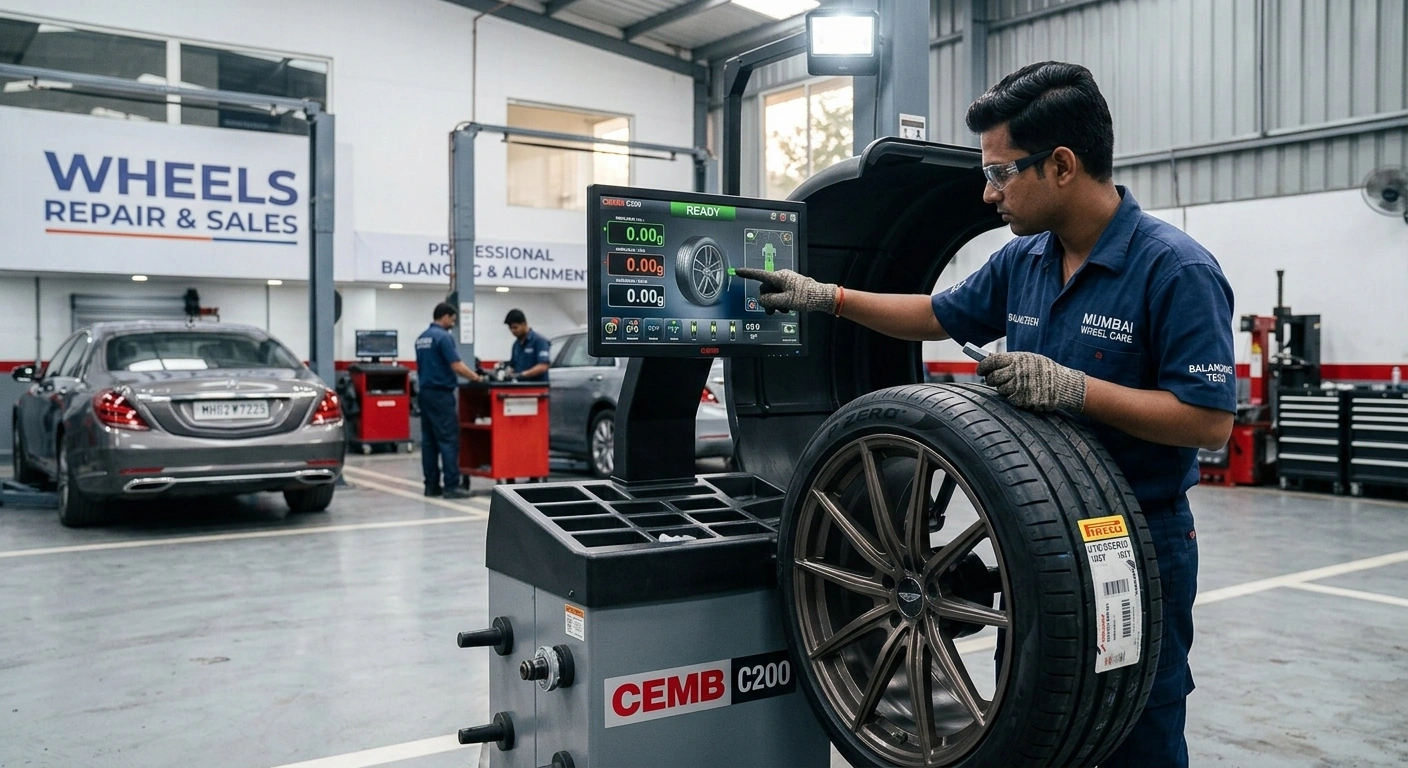
Wheel balancing is designed to distribute weight evenly around the rotating wheel and tyre assembly.
If a wheel is bent or deformed, balancing may become difficult.
You may notice vibration through the steering wheel, particularly at higher speeds.
If a technician repeatedly adds balancing weights but the vibration continues, the wheel itself may need further inspection.
This does not automatically mean the wheel must be replaced. Depending on the type and severity of damage, Mag Wheel Damage Repair may be possible.
Quick Answer
Persistent vibration after balancing can indicate wheel deformation, tyre problems, or another suspension-related issue. A proper inspection is needed to identify the actual cause.
5. Pothole Impacts Can Cause Hidden Damage
Mumbai’s roads can present challenging conditions for vehicles, especially during and after the monsoon season.
A pothole impact can transfer a large amount of force directly into the tyre and wheel.
The tyre may absorb some of the impact, but the wheel can still become distorted.
The problem is that the damage may not look serious immediately.
A driver might think:
“There is no crack, so the wheel must be fine.”
That assumption can be misleading.
A wheel should be inspected after a strong impact, particularly if new vibration, tyre pressure loss, or steering changes appear afterward.
6. Why Visual Inspection Is Not Always Enough
A basic visual inspection can identify obvious problems such as:
- Large cracks
- Broken sections
- Major dents
- Severe curb rash
- Missing material
But it may not identify subtle deformation.
Professional inspection can involve:
- Removing the wheel if necessary.
- Inspecting the inner and outer surfaces.
- Checking the bead-seat area.
- Measuring wheel runout.
- Checking for balancing issues.
- Inspecting the tyre condition.
- Determining whether repair or replacement is appropriate.
This diagnostic process is especially important before deciding on Mag Wheel Damage Repair.
Signs Your Mag Wheel May Need Attention
You should consider getting your wheel professionally inspected if you experience any of the following:
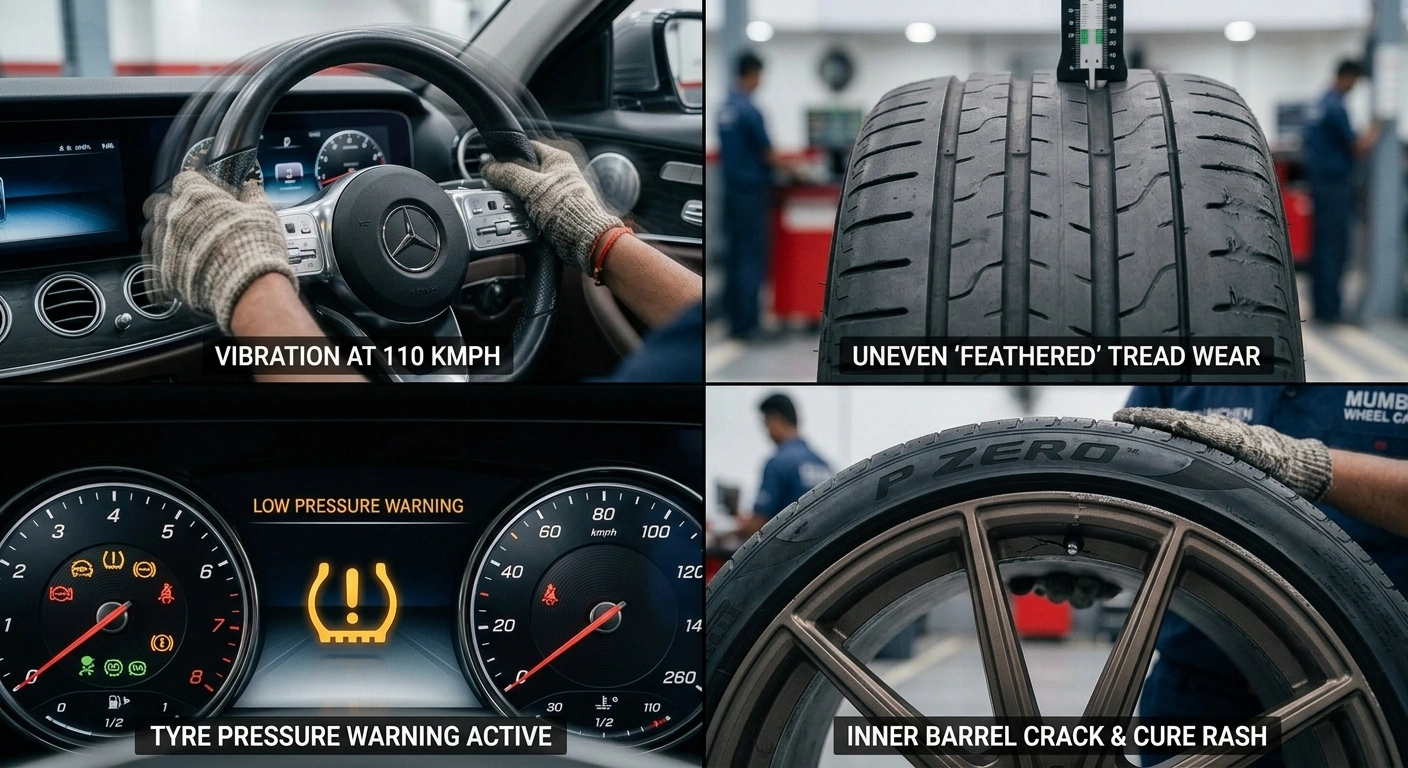
Steering Wheel Vibration
Vibration, particularly at specific speeds, can be associated with wheel imbalance, tyre issues, or wheel deformation.
Repeated Tyre Pressure Loss
If the tyre continues losing air without an obvious puncture, inspect the valve, tyre bead, and wheel.
Uneven Tyre Wear
A deformed wheel can contribute to irregular tyre contact and uneven wear.
Vehicle Pulling
If the vehicle starts pulling to one side, several components could be responsible, including wheel alignment or suspension issues. A wheel inspection can help rule out wheel-related causes.
Repeated Balancing Problems
If balancing does not solve persistent vibration, the wheel should be checked for runout or deformation.
Can Mag Wheel Damage Be Repaired?
In some situations, yes.
The possibility of repair depends on factors such as:
- Type of wheel
- Material construction
- Location of damage
- Amount of deformation
- Presence of cracks
- Structural condition
- Manufacturer or industry safety considerations
Minor bends or certain forms of deformation may be repairable using appropriate professional equipment.
However, not every damaged wheel should be repaired.
If the wheel has serious structural damage, extensive cracking, or damage that compromises its safety, replacement may be the better option.
A responsible repair specialist should recommend repair only when the wheel is suitable for it.
What Happens During Mag Wheel Damage Repair?
The exact process depends on the type of damage.
A professional workshop may follow steps such as:
Step 1: Initial Inspection
The technician examines the wheel and tyre for visible and hidden problems.
Step 2: Wheel Removal
The tyre may be removed when access to the wheel’s inner surface is required.
Step 3: Runout Measurement
The wheel is checked to identify radial or lateral deformation.
Step 4: Repair Assessment
The technician determines whether the wheel can safely be restored.
Step 5: Controlled Straightening
If suitable, specialised equipment may be used to restore the wheel’s shape.
Step 6: Final Inspection
The repaired wheel is checked again to confirm that the deformation has been addressed.
Step 7: Tyre Installation and Balancing
The tyre is reinstalled and the wheel assembly is balanced before being returned to the vehicle.
This systematic approach makes Mag Wheel Damage Repair safer and more reliable than attempting to correct wheel damage without appropriate equipment.
Repair or Replace: Which Is Better?
The answer depends on the condition of the wheel.
| Condition | Possible Approach |
|---|---|
| Minor bend | Professional repair may be possible |
| Slight runout | Inspection and correction may be possible |
| Bead-seat deformation | Assessment and repair depending on severity |
| Severe crack | Replacement may be safer |
| Major structural damage | Replacement generally preferred |
| Repeated damage | Detailed inspection recommended |
The key point is that the decision should be based on the wheel’s actual condition, not simply on whether you can see a crack.
How to Reduce the Risk of Mag Wheel Damage
You cannot eliminate every road hazard, but you can reduce the risk.
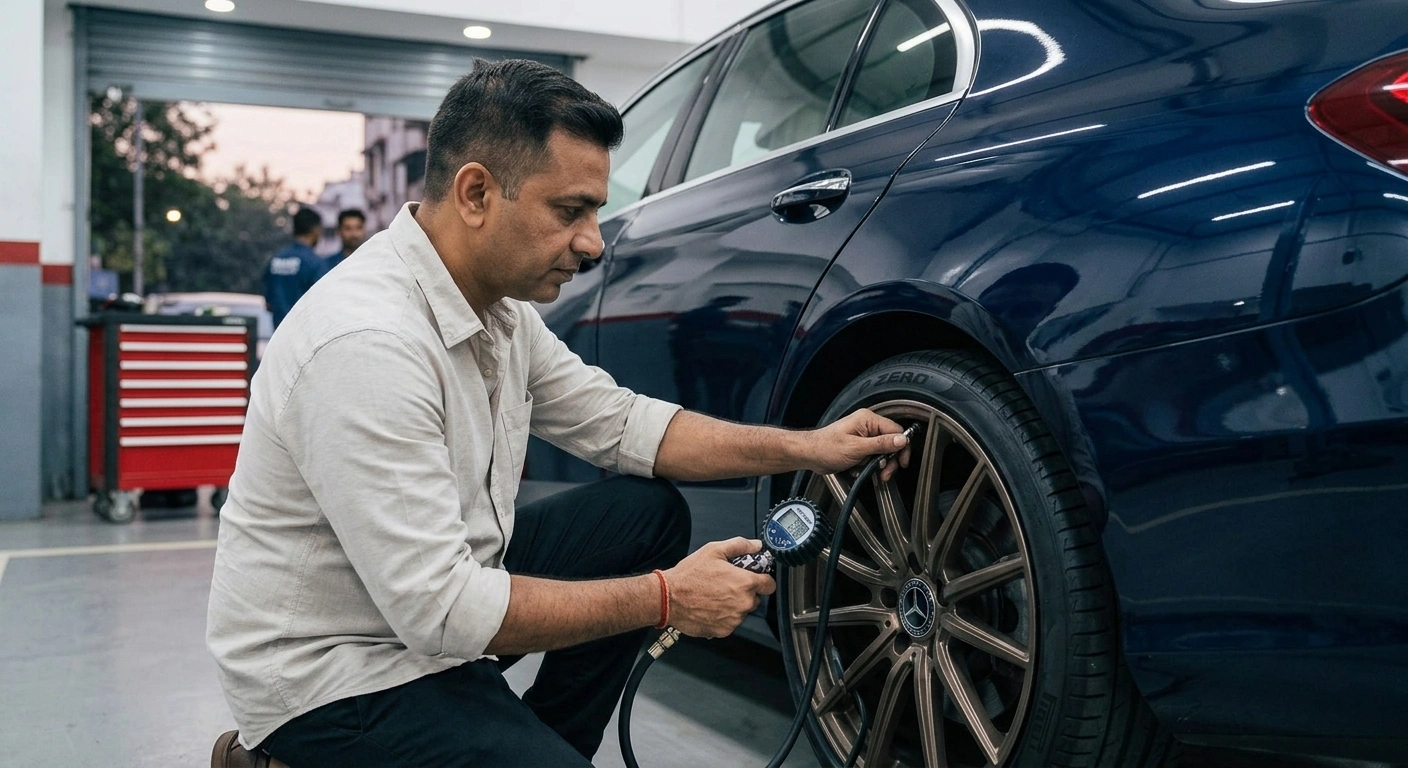
Maintain Correct Tyre Pressure
Properly inflated tyres can provide better protection against road impacts.
Slow Down Near Potholes
Reducing speed gives the tyre and wheel a better chance of absorbing road irregularities.
Avoid Hard Kerb Impacts
Parking impacts can damage the rim edge and bead-seat area.
Check Wheels After Major Impacts
If you hit a pothole hard, pay attention to changes in steering, vibration, and tyre pressure.
Get Problems Checked Early
Early inspection can prevent a small wheel problem from developing into a larger tyre or handling issue.
Why Professional Inspection Matters
Wheel damage is not only about appearance.
A wheel is an important part of the vehicle’s tyre and suspension system. If its shape or condition is compromised, it can affect how the tyre contacts the road.
Professional inspection provides a clearer picture of the actual condition of the wheel.
Instead of relying only on what you can see, technicians can assess measurements, tyre condition, wheel balance, and physical deformation.
For this reason, professional Mag Wheel Damage Repair should always begin with proper diagnosis rather than immediately attempting to straighten or modify the wheel.
When Should You Get Your Mag Wheel Checked?
Consider an inspection if:
- You recently hit a deep pothole.
- The vehicle has developed new vibrations.
- Your tyre keeps losing pressure.
- Balancing does not solve the vibration.
- You notice unusual tyre wear.
- The steering feels different after an impact.
- You see damage on the wheel edge.
- The vehicle has been involved in a minor collision.
Even if the wheel appears normal, these symptoms justify a closer inspection.
Frequently Asked Questions
Q1. Can a mag wheel be damaged without cracking?
Yes. A wheel can develop bends, runout, bead-seat deformation, or other damage without developing a visible crack.
Q2. How can I tell if my mag wheel is bent?
Common signs include steering vibration, uneven tyre wear, repeated air loss, and persistent balancing problems. Professional runout measurement provides a more accurate diagnosis.
Q3. Can a bent mag wheel cause tyre pressure loss?
Yes. If the wheel’s bead-seat area is deformed, it can prevent the tyre from forming a proper airtight seal.
Q4. Is every bent mag wheel repairable?
No. Repairability depends on the wheel’s material, construction, location of damage, severity, and overall structural condition.
Q5. Is wheel balancing enough to fix a bent mag wheel?
Not necessarily. Balancing corrects weight distribution, while a bent wheel involves physical deformation. If the wheel itself is damaged, balancing alone may not resolve the problem.
A mag wheel does not need to have a visible crack to have a problem.
Hidden bends, runout, bead-seat deformation, imbalance, and impact damage can all affect the way a wheel and tyre perform. In many cases, the first warning sign is not what the wheel looks like—it is what the vehicle starts doing.
If your car develops vibration, repeated tyre pressure loss, uneven tyre wear, or balancing problems after hitting a pothole or kerb, getting the wheel professionally inspected is a sensible step.
The right approach to Mag Wheel Damage Repair starts with accurate diagnosis. A qualified technician can determine whether the wheel can be safely repaired or whether replacement is the better option.
Taking action early can help protect your tyres, improve driving comfort, and maintain safe vehicle performance.
Author: Areef Shaikh
Last Updated: August 2026
Category: Alloy Wheel Repair & Rim Repair
Social Media: Instagram – @wheelsrepairsales