You may notice that one side of your tyre is wearing faster than the other, or that the tread looks uneven even though you regularly maintain your vehicle.
While incorrect tyre pressure and wheel alignment are common causes, the condition of the rim can also play a role.
A bent, deformed, or damaged rim can affect how the tyre sits and rotates. In some situations, this can contribute to irregular tyre wear, vibration, poor road contact, or other handling symptoms.
For Mumbai drivers dealing with potholes, uneven roads, speed breakers, and kerb impacts, understanding Uneven Tyre Wear Due to Rim Damage can help identify problems before they become more expensive.
Yes, rim damage can contribute to uneven tyre wear. A bent or deformed rim can affect wheel rotation and tyre seating, although alignment, tyre pressure, suspension, and tyre condition can also cause uneven wear.
How Can Rim Damage Affect Tyre Wear?
A tyre is designed to maintain consistent contact with the road while the wheel rotates smoothly.
If the rim is bent or deformed, the tyre may not rotate as evenly as intended. Depending on the type and severity of the damage, this can affect the way forces are distributed across the tyre.
Possible results include:
- Irregular tread wear
- Uneven shoulder wear
- Vibration
- Reduced driving comfort
- Poor tyre seating
- Slow air pressure loss
- Changes in handling
This is why Uneven Tyre Wear Due to Rim Damage should be considered when unusual tyre wear appears after a pothole or impact.
A damaged rim can affect tyre rotation, seating, and road contact, potentially contributing to irregular tyre wear. However, other vehicle components must also be checked.
What Types of Rim Damage Can Affect Tyres?
Not all rim damage looks the same.
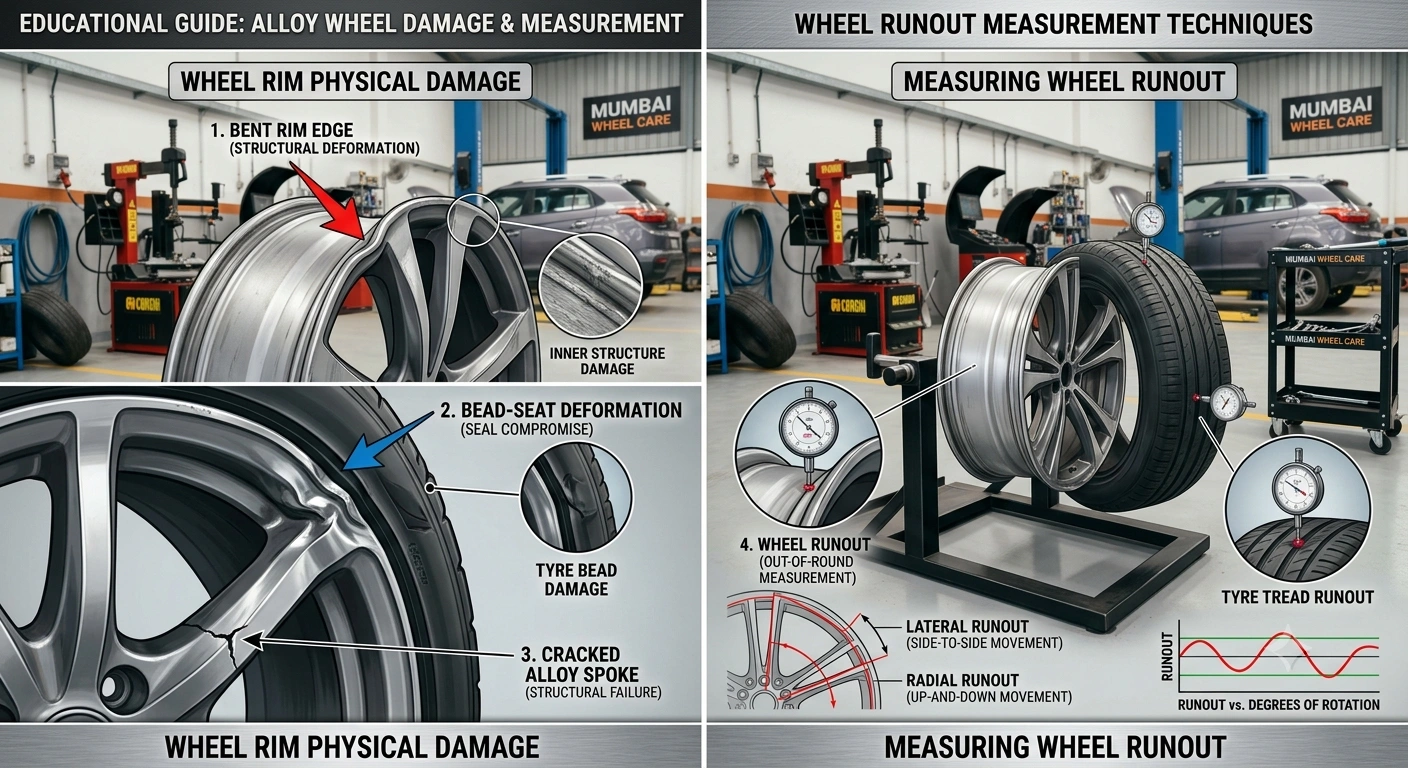
Bent Rim
A bent rim may occur after a strong pothole or kerb impact. Small bends can be difficult to see without professional equipment.
Wheel Runout
Runout occurs when the wheel deviates from its intended path while rotating.
Excessive radial or lateral runout can affect tyre movement and driving comfort.
Bead-Seat Damage
The tyre bead forms an important seal against the rim. Damage or deformation in this area can contribute to air leakage and improper tyre seating.
Cracks or Structural Damage
Cracks are more serious and require immediate professional assessment. Depending on their location and severity, replacement may be safer than repair.
Common Signs of Uneven Tyre Wear
Uneven wear can appear in several forms.
Inner Edge Wear
The inside shoulder of the tyre wears faster than the rest of the tread.
Outer Edge Wear
The outside shoulder becomes more worn than the centre.
Centre Wear
The centre tread wears faster, which can sometimes be related to incorrect tyre pressure.
Cupping or Scalloping
Small dips or raised areas appear around the tread.
Patchy Wear
Different sections of the tread show noticeably different levels of wear.
These patterns can provide useful clues, but they should not be used alone to diagnose Uneven Tyre Wear Due to Rim Damage.
A professional inspection is more reliable.
Is Rim Damage the Only Cause of Uneven Tyre Wear?
No.
Uneven tyre wear can have several causes.
Common possibilities include:
- Incorrect tyre pressure
- Poor wheel alignment
- Worn suspension components
- Damaged steering components
- Wheel imbalance
- Tyre defects
- Incorrect tyre rotation
- Aggressive driving
- Rim deformation
This is why a technician should inspect the complete wheel, tyre, steering, suspension, and alignment system.
For example, inner-edge tyre wear is often associated with alignment issues, so assuming that the rim is responsible without testing can lead to an incorrect repair.
Why Mumbai Roads Can Increase the Risk
Mumbai’s roads can expose wheels and tyres to frequent impacts.
Common challenges include:
- Deep potholes
- Waterlogged roads
- Uneven road surfaces
- Speed breakers
- Road construction
- Heavy traffic
- Kerb impacts
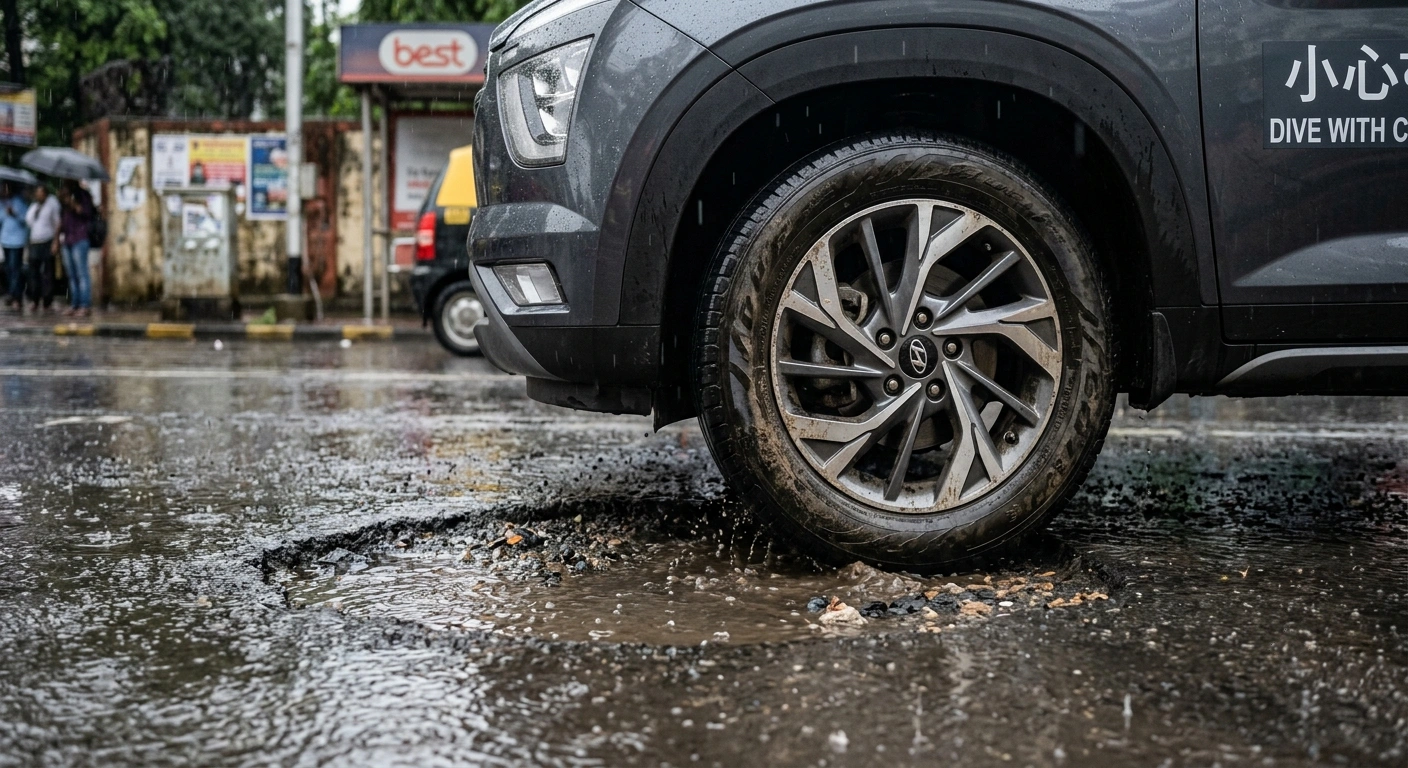
During monsoon conditions, potholes can become difficult to see because water may cover their actual depth.
A strong impact can affect the tyre and rim at the same time.
If uneven tyre wear appears soon after a major impact, checking for Uneven Tyre Wear Due to Rim Damage can be a sensible part of the diagnosis.
Practical Tip
After a strong pothole impact, pay attention to vibration, tyre pressure, steering changes, and new tread wear patterns.
How Do Professionals Check Whether Rim Damage Is Affecting the Tyre?
A professional inspection may include several steps.
1. Visual Rim Inspection
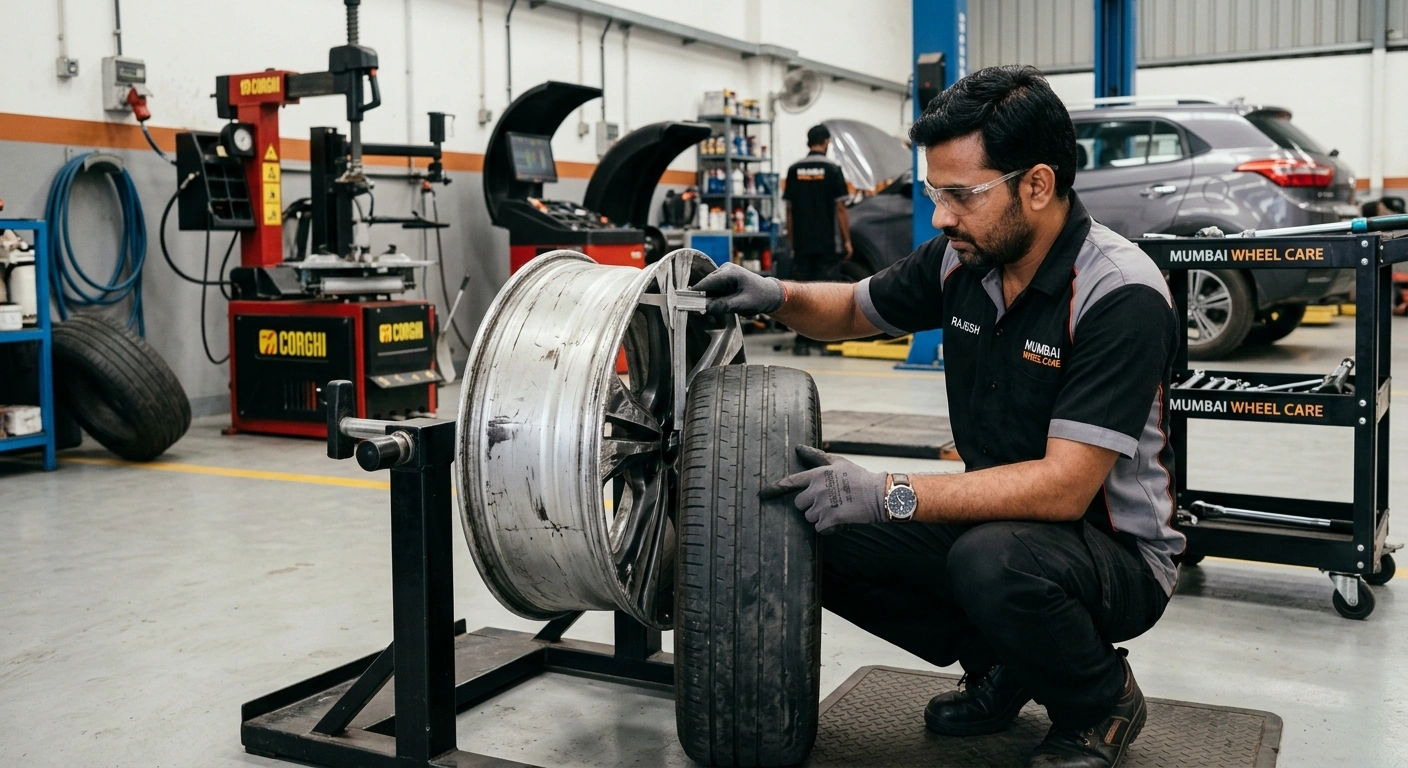
The technician checks the inner and outer rim surfaces for bends, cracks, dents, and impact marks.
2. Wheel Runout Test
The wheel is rotated on appropriate equipment to measure radial and lateral deviation.
3. Tyre Inspection
The tread, sidewall, bead, and overall tyre condition are checked.
4. Tyre Pressure Check
Incorrect pressure can itself cause uneven wear, so recommended pressure should be verified.
5. Wheel Alignment Check
Alignment measurements can identify camber, toe, or other geometry problems.
6. Suspension Inspection
Worn or damaged suspension components can also contribute to abnormal tyre wear.
This complete approach makes diagnosing Uneven Tyre Wear Due to Rim Damage more accurate.
Can Repairing a Damaged Rim Help Prevent Further Tyre Wear?
If the rim is confirmed to be contributing to the problem and is suitable for repair, correcting the wheel may help restore more consistent tyre rotation and seating.
However, repairing the rim alone may not solve uneven wear if alignment, tyre pressure, suspension, or another issue is also present.
The underlying cause should therefore be identified before repair.
Repairing a suitable damaged rim can help when the rim is contributing to tyre problems, but the complete wheel, tyre, alignment, and suspension system should be checked.
What Happens During Rim Repair?
The exact process depends on the type of damage.
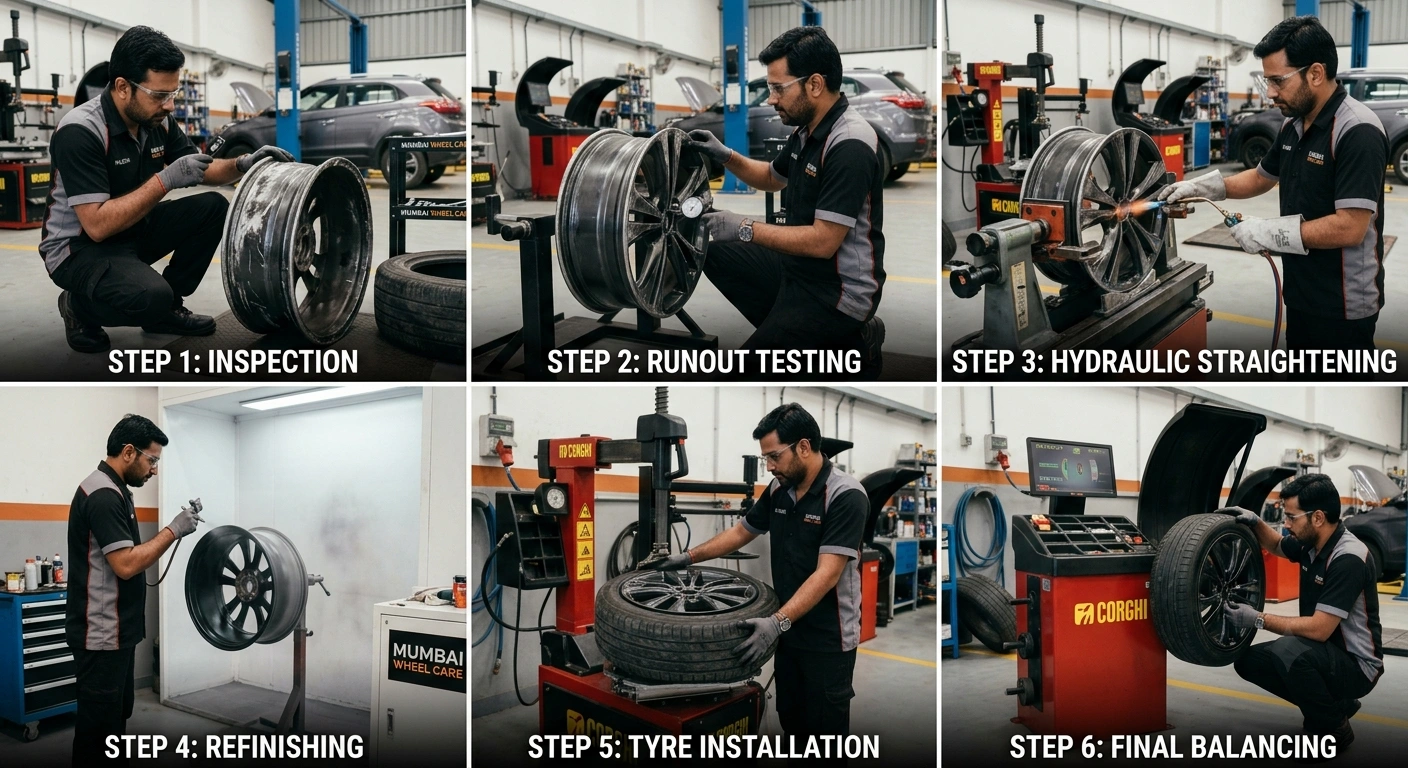
A professional workshop may follow these steps:
- Initial inspection – Identify visible and hidden damage.
- Tyre removal if required – Inspect the inner rim and bead-seat area.
- Runout measurement – Check the wheel’s rotational deviation.
- Repair assessment – Determine whether the wheel is suitable for repair.
- Controlled repair – Correct suitable deformation using appropriate equipment.
- Final inspection – Recheck the wheel after repair.
- Tyre installation and balancing – Reinstall and balance the assembly.
- Alignment check if required – Verify that related vehicle geometry is correct.
This diagnostic-first process helps address the actual cause rather than simply treating the tyre wear.
How Can Mumbai Drivers Prevent Uneven Tyre Wear?
You cannot avoid every pothole or road hazard, but you can reduce the risk of tyre and rim problems.
Maintain Correct Tyre Pressure
Check tyre pressure regularly and follow the vehicle manufacturer’s recommended pressure.
Slow Down Near Potholes
Reducing speed can reduce the force transferred to the tyre and wheel.
Avoid Kerb Impacts
Hard contact with kerbs can damage the rim edge and tyre sidewall.
Check Wheels After Major Impacts
If you hit a pothole hard, inspect the wheel and monitor the vehicle for vibration or tyre pressure loss.
Maintain Wheel Alignment
Regular alignment checks can help prevent irregular tyre wear caused by incorrect geometry.
Rotate Tyres as Recommended
Following the vehicle manufacturer’s tyre rotation recommendations can promote more even tread wear.
When Should You Get Your Rim and Tyres Checked?
Consider professional inspection if:
- One tyre is wearing faster than the others.
- The inner or outer shoulder is wearing unusually quickly.
- You notice vibration while driving.
- The vehicle recently hit a deep pothole.
- The tyre repeatedly loses air.
- Wheel balancing does not resolve vibration.
- The car pulls to one side.
- You notice visible rim damage.
Early diagnosis can help prevent premature tyre replacement and identify whether the issue involves the rim, tyre, alignment, or suspension.
Frequently Asked Questions
Q1. Can a bent rim cause uneven tyre wear?
Yes, it can contribute to uneven tyre wear, particularly if the deformation affects wheel rotation or tyre seating. However, alignment, pressure, suspension, and tyre condition should also be checked.
Q2. How do I know if my tyre wear is caused by the rim?
There is no single visual sign that proves rim damage is the cause. A technician should inspect the rim, measure runout, examine the tyre, and check alignment and suspension.
Q3. Can a pothole cause both rim damage and uneven tyre wear?
Yes. A strong pothole impact can damage the rim and tyre and may also affect alignment or suspension components.
Q4. Does wheel balancing prevent uneven tyre wear?
Balancing can help address vibration caused by uneven weight distribution, but it does not correct alignment problems, tyre defects, or a physically damaged rim.
Q5. Can rim repair fix uneven tyre wear?
If the rim is contributing to the wear and is safely repairable, correcting the rim may help. However, the cause of the wear should be diagnosed first.
Uneven tyre wear should never be dismissed as simply a normal part of driving.
A damaged or deformed rim can contribute to irregular tyre wear, but it is only one possible cause. Tyre pressure, alignment, wheel balance, suspension, steering components, and tyre condition can all influence how a tyre wears.
For Mumbai drivers, potholes and uneven roads make rim inspection especially relevant after a strong impact.
If you notice unusual tread wear, vibration, repeated air loss, or a change in handling, getting the complete wheel and tyre assembly inspected is a sensible step.
Author: Areef Shaikh
Last Updated: August 2026
Category: Rim Repair & Tyre Care
Social Media: Instagram – @wheelsrepairsales