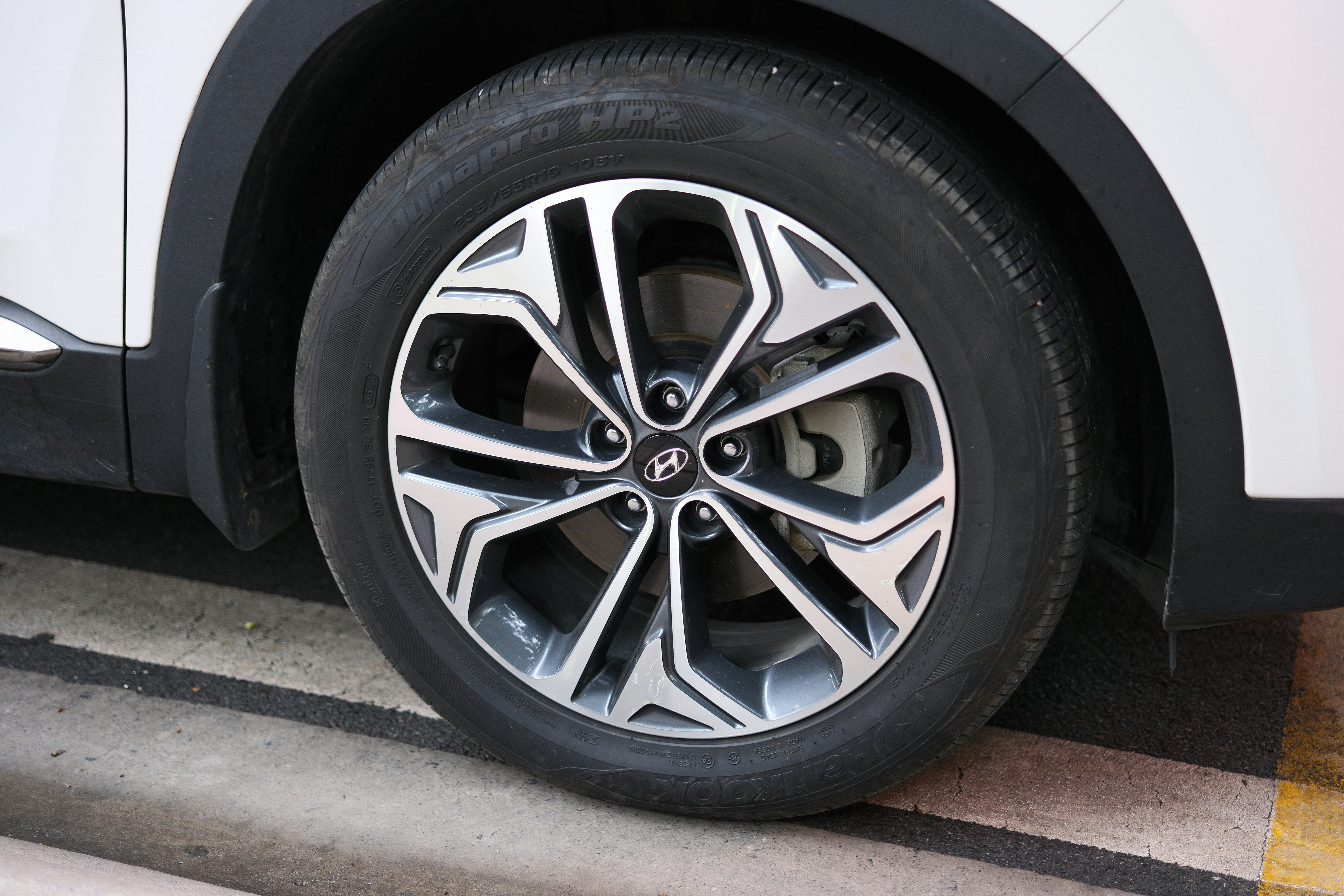
Diamond cut alloy wheels are popular because of their distinctive machined finish. The combination of a polished metal surface and contrasting painted sections gives the wheel a premium appearance.
However, their appearance can sometimes hide problems.
A diamond cut alloy may develop bends, runout, bead-seat issues, balancing problems, or finish deterioration without showing an obvious crack or large scratch. Some problems only become noticeable when you drive the car or when the wheel is professionally inspected.
This is particularly relevant in Mumbai, where potholes, uneven roads, speed breakers, traffic, and road construction can expose alloy wheels to repeated impacts.
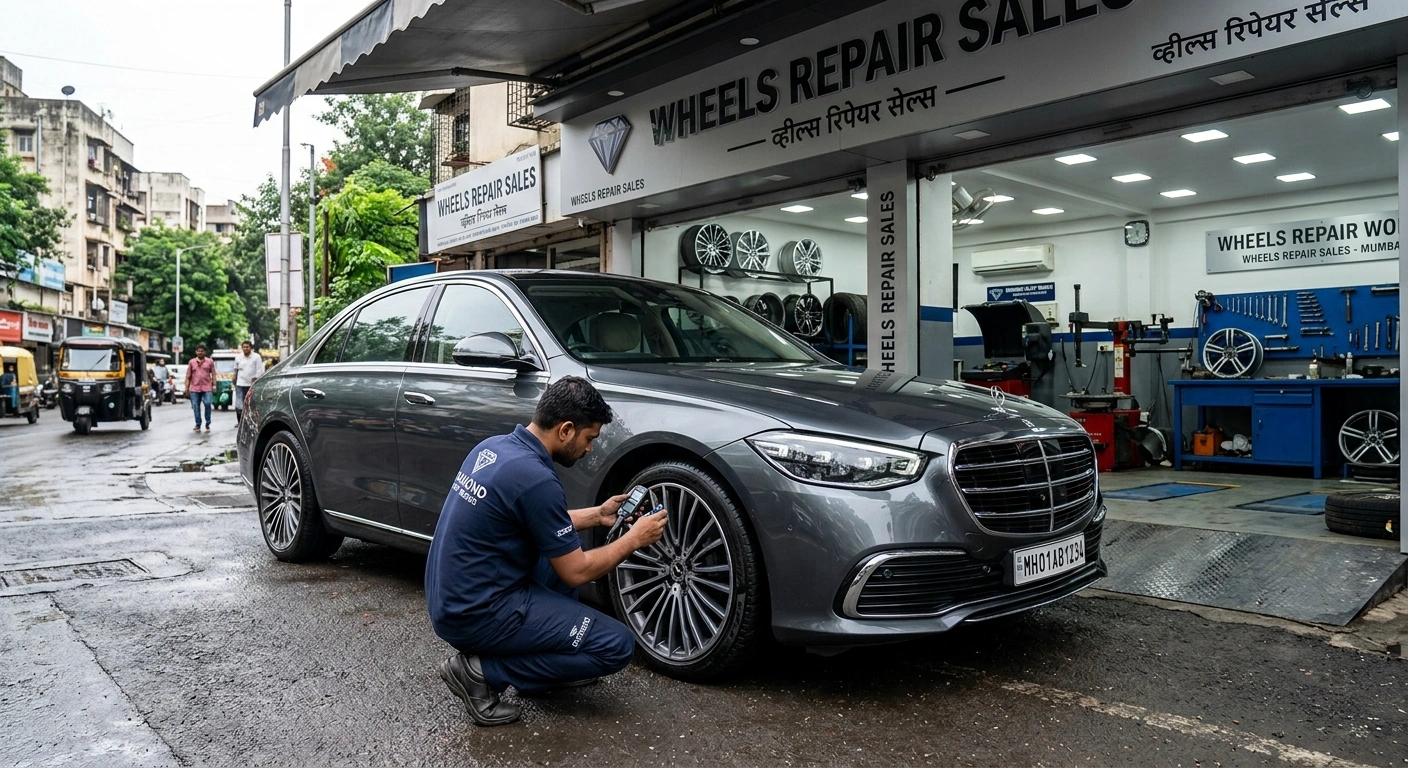
If your car feels different after hitting a pothole or you notice tyre pressure loss, vibration, or unusual tyre wear, professional Diamond Cut Alloy Wheel Repair in Mumbai may be worth considering even if the wheel looks fine at first glance.
Yes. A diamond cut alloy can require repair even when there is no obvious visible damage. Hidden bends, wheel runout, tyre bead problems, balancing issues, and subtle surface damage can affect wheel performance and safety.
What Makes Diamond Cut Alloy Wheels Different?
Diamond cut alloy wheels have a distinctive finish created by precision machining.
Instead of simply painting the entire face of the wheel, a machining process removes a very thin layer from selected areas. This exposes the bright metal underneath and creates the characteristic two-tone appearance.
The result looks attractive, but the machined surface requires careful handling.
A diamond cut wheel can experience two broad categories of problems:
- Structural or functional damage, such as bends and runout
- Cosmetic or finish damage, such as scratches, corrosion, and lacquer deterioration
Both can require attention, but the repair approach is different.
Why Can a Diamond Cut Alloy Need Repair Without Visible Damage?
A wheel does not need to have a crack to have a problem.
An impact can slightly change the wheel’s shape without creating a dramatic mark on the visible face. The affected area may be on the inside edge, rear section, or bead-seat area.
Some common hidden issues include:
- Slight rim bends
- Radial runout
- Lateral runout
- Bead-seat deformation
- Wheel imbalance
- Inner barrel damage
- Minor impact deformation
- Tyre sealing problems
These problems may become apparent only when the wheel rotates or when the tyre begins behaving differently.
No visible crack does not necessarily mean a diamond cut alloy wheel is undamaged. A professional inspection can identify deformation that may not be visible during a basic visual check.
1. A Slightly Bent Rim May Not Be Visible
One of the most common problems after a strong pothole impact is a bent rim.
The bend may be very small and difficult to notice when looking at the wheel while it is stationary.
However, once the wheel starts rotating, even a small deformation can affect the way the tyre and wheel assembly moves.
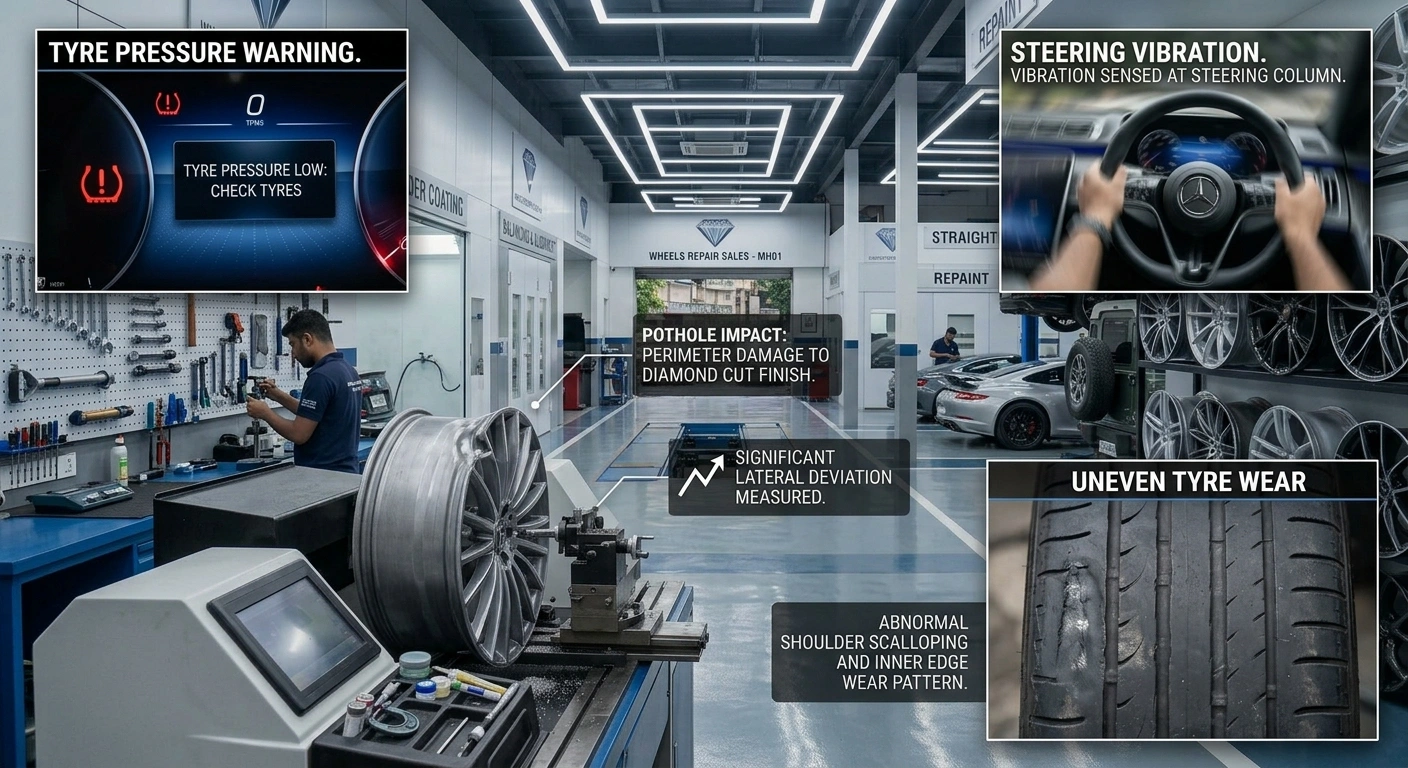
You may notice:
- Steering wheel vibration
- Vibration at certain speeds
- Uneven tyre wear
- Repeated balancing problems
- Changes in vehicle handling
- Slow tyre pressure loss
If these symptoms appear after an impact, Diamond Cut Alloy Wheel Repair in Mumbai can involve inspecting the wheel for runout and deformation before deciding on the appropriate repair.
2. Wheel Runout Can Cause Vibration
Wheel runout describes how much a wheel deviates from its intended shape while rotating.
There are two primary forms of runout.
Radial Runout
Radial runout occurs when the wheel moves slightly up and down as it rotates.
Lateral Runout
Lateral runout occurs when the wheel moves from side to side during rotation.
Excessive runout can affect driving comfort and tyre contact with the road.
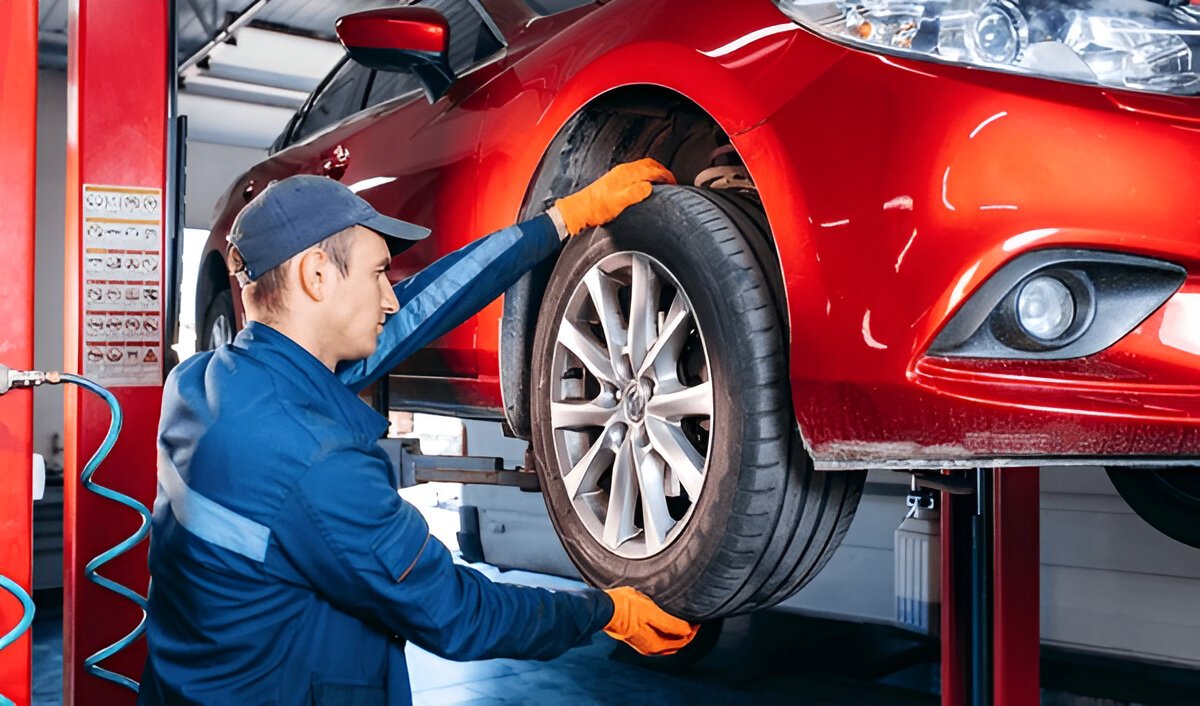
A professional wheel repair technician can use specialised equipment to measure these deviations rather than relying only on visual inspection.
If your car develops vibration after a pothole or road impact, the wheel should be checked for runout even if there are no visible cracks.
3. The Inner Side of the Wheel Can Be Damaged
Many drivers inspect only the front face of their alloy wheels.
However, the inner barrel and rear rim edge can receive significant impact from potholes and road hazards.
Damage on the inner side may not be visible unless the wheel is removed.
This is one reason a professional inspection is important after a major impact.
A technician may check:
- Inner rim edge
- Inner barrel
- Bead seat
- Wheel mounting area
- Spoke structure
- Front machined surface
A detailed inspection helps determine whether Diamond Cut Alloy Wheel Repair in Mumbai is required for a structural problem or whether the wheel is actually in good condition.
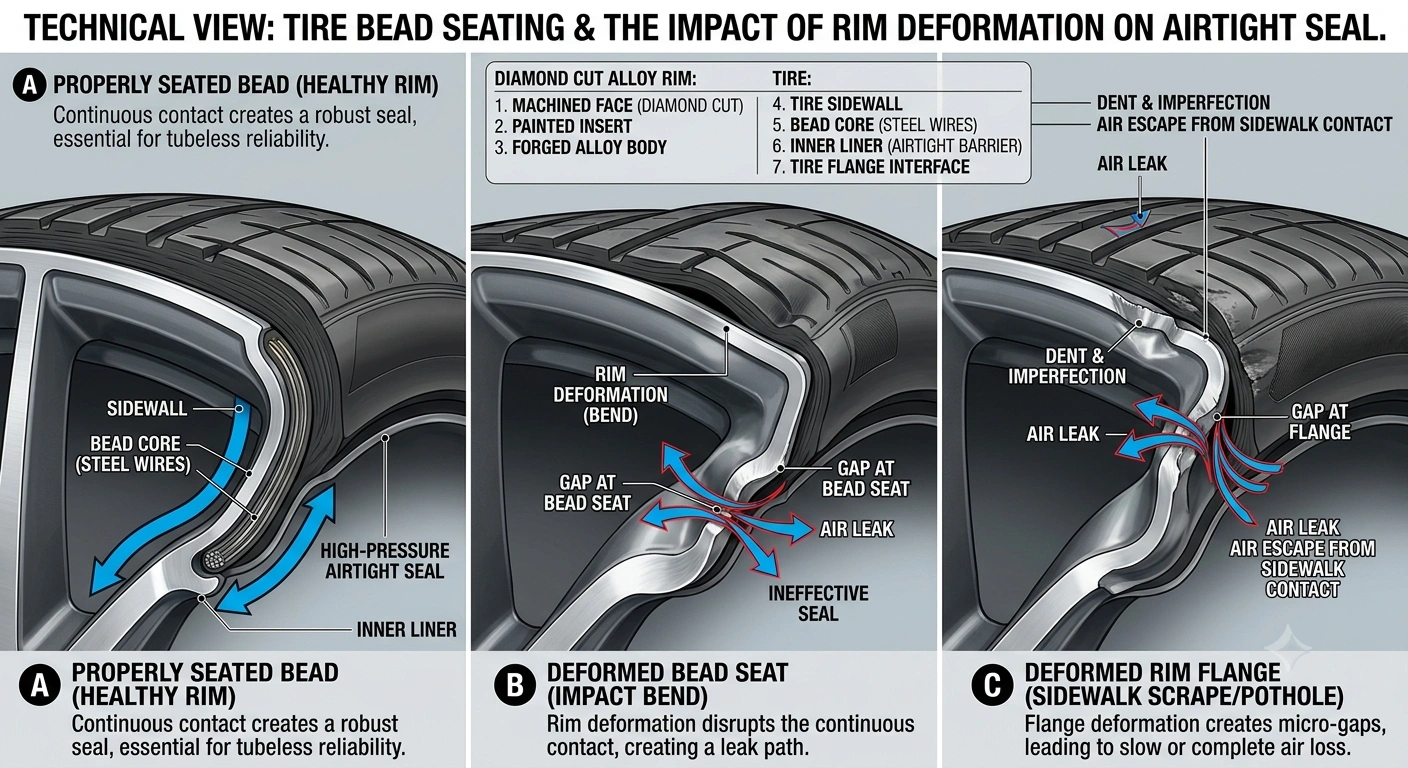
4. A Damaged Bead Seat Can Cause Air Loss
The tyre forms an airtight seal against the wheel through the bead area.
If the rim becomes slightly deformed around this area, the tyre may not seal correctly.
This can result in:
- Slow tyre air leaks
- Repeated tyre inflation
- Low tyre pressure
- TPMS warnings
- Difficulty maintaining recommended tyre pressure
Sometimes drivers assume the tyre itself has a puncture.
But if no puncture can be found, the wheel and bead-seat area should also be inspected.
5. Wheel Imbalance May Be a Warning Sign
Wheel balancing helps distribute the weight of the tyre and wheel assembly evenly.
If the wheel has been deformed by an impact, balancing may become difficult.
For example, a driver may have the wheel balanced but still experience vibration at certain speeds.
This does not automatically prove that the alloy wheel is bent. Tyre defects, suspension components, wheel alignment, and other factors can also cause vibration.
However, persistent vibration deserves investigation.
If the wheel itself is found to be damaged, Diamond Cut Alloy Wheel Repair in Mumbai may be considered depending on the severity and type of damage.
Persistent vibration after balancing can have several causes. A professional inspection can determine whether the wheel, tyre, alignment, or suspension is responsible.
6. Potholes Are a Major Risk for Alloy Wheels in Mumbai
Mumbai drivers regularly deal with potholes, uneven road surfaces, speed breakers, construction zones, and waterlogged roads during the monsoon.
A pothole impact can transfer considerable force through the tyre and directly into the wheel.
The visible damage may be minimal, but the wheel can still become slightly distorted.
This is why it is important to pay attention to what happens after an impact.
If your car develops new vibration, steering changes, tyre pressure loss, or unusual tyre wear, the wheel should be inspected.
Practical Tip
If you hit a deep pothole hard, don’t check only the tyre. Have the wheel, tyre, alignment, and suspension inspected if you notice any new symptoms.
7. Diamond Cut Finish Damage May Be Subtle
Not every problem is structural.
The diamond cut face itself can develop subtle cosmetic damage that may initially appear minor.
Possible problems include:
- Fine scratches
- Kerb rash
- Oxidation
- Lacquer peeling
- Surface corrosion
- Discolouration
- Small machining imperfections
Because the diamond cut finish is created by machining the wheel surface, restoration requires careful attention to the original finish.
A simple repaint may not reproduce the same appearance as a properly restored diamond cut surface.
Can a Diamond Cut Alloy Wheel Be Repaired?
In many cases, yes—but the repair method depends on the type and severity of damage.
A professional technician may first determine whether the problem is:
Structural: bend, runout, bead-seat deformation, or other wheel damage.
Cosmetic: scratches, kerb damage, corrosion, or deterioration of the diamond cut finish.
Some wheels may be suitable for repair, while others may have damage serious enough to make replacement the safer option.
The decision should be based on the actual condition of the wheel rather than appearance alone.
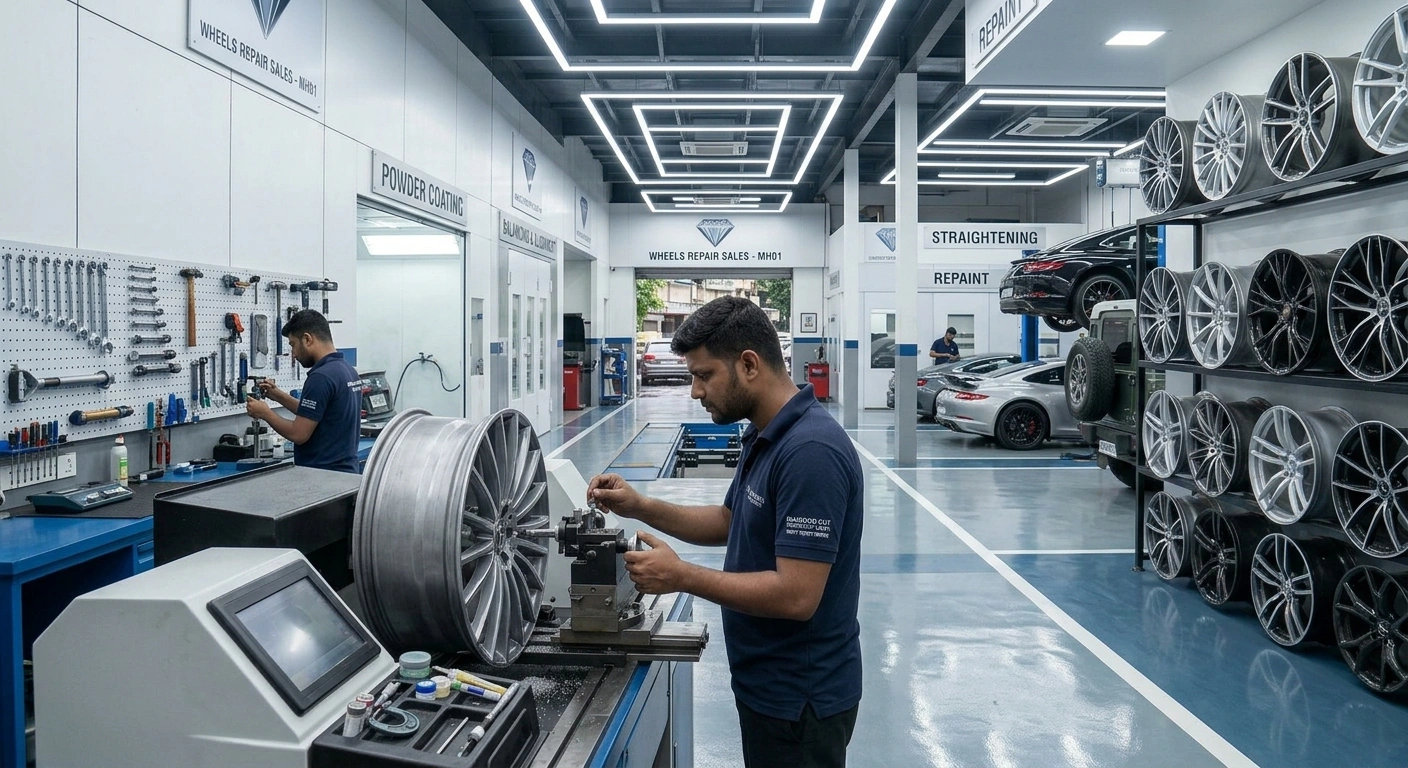
What Is the Diamond Cut Alloy Repair Process?
The exact procedure varies depending on the damage.
A professional workshop may follow these general steps:
Step 1: Initial Inspection
The wheel is examined for visible and hidden damage.
Step 2: Tyre Removal
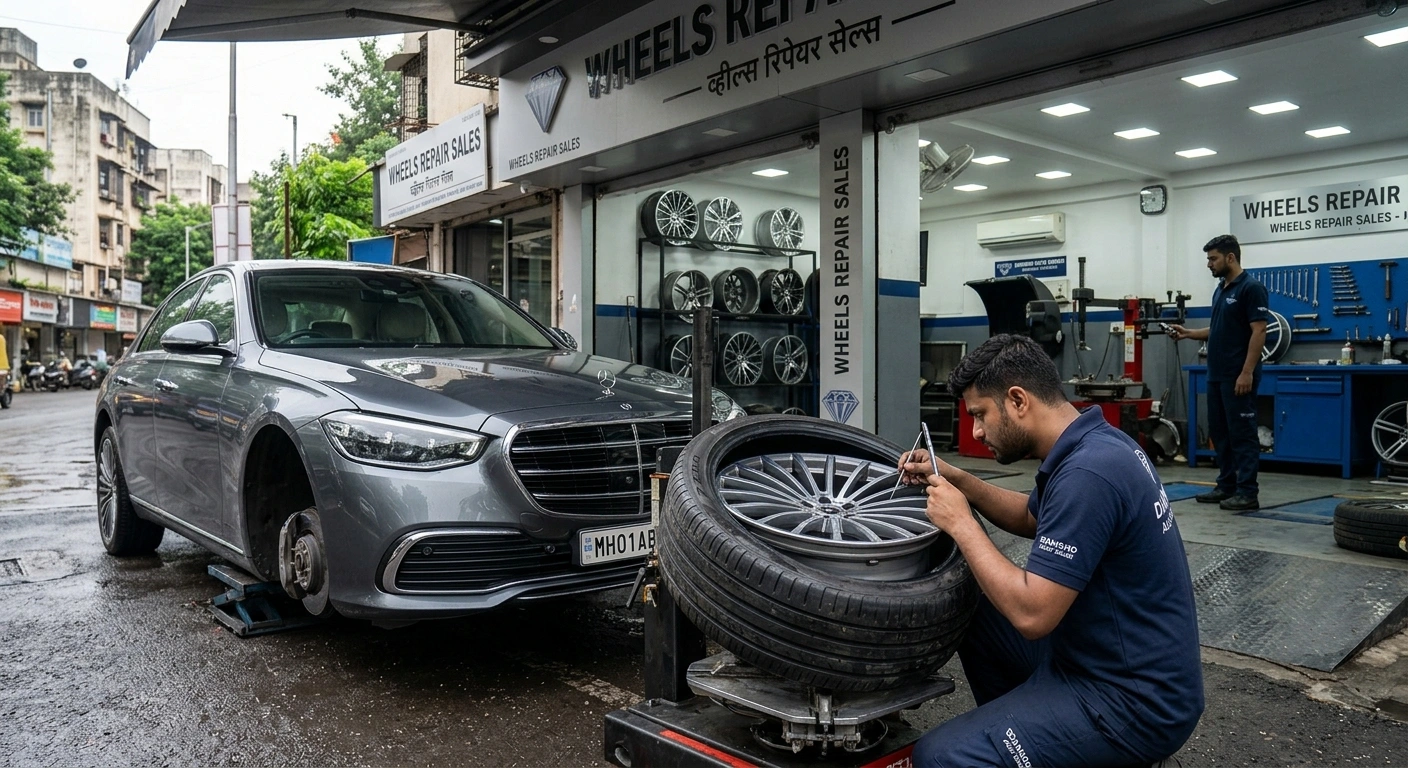
The tyre may be removed when the inner rim, bead seat, or barrel needs detailed inspection.
Step 3: Runout and Deformation Check
The wheel is mounted on appropriate equipment to check its shape and rotation.
Step 4: Damage Assessment
The technician determines whether the problem is structural, cosmetic, or both.
Step 5: Wheel Repair
If the wheel is suitable for repair, the required process may involve controlled straightening, surface restoration, or diamond cut refinishing.
Step 6: Finishing
For cosmetic repairs, the wheel may undergo refinishing and protective coating according to the required finish.
Step 7: Tyre Installation
The tyre is carefully reinstalled.
Step 8: Balancing and Final Inspection
The completed wheel and tyre assembly is balanced and checked before installation on the vehicle.
This systematic approach helps ensure that Diamond Cut Alloy Wheel Repair in Mumbai addresses the actual cause of the problem rather than simply treating the visible symptom.
Repair or Replace: Which Option Is Better?
The answer depends on the condition of the wheel.
| Wheel Condition | Typical Consideration |
|---|---|
| Minor bend | Professional repair may be possible |
| Slight runout | Inspection and correction may be possible |
| Minor kerb damage | Cosmetic restoration may be possible |
| Diamond cut surface damage | Refinishing may be possible |
| Bead-seat deformation | Requires professional assessment |
| Severe structural crack | Replacement may be safer |
| Major structural damage | Replacement may be recommended |
A reputable technician should not recommend repair simply because repair is possible.
Safety and wheel integrity should come first.
Signs Your Diamond Cut Alloy Needs Inspection
You should consider having your wheel checked if you notice:
- Steering wheel vibration
- Repeated tyre pressure loss
- Uneven tyre wear
- Difficulty balancing the wheel
- New steering behaviour after an impact
- Visible kerb damage
- Scratches or deterioration on the machined surface
- Vibration at highway speeds
- A strong pothole impact
- Tyre bead sealing problems
A change in vehicle behaviour can be a more important warning sign than visible wheel damage.
How to Protect Your Diamond Cut Alloy Wheels
You cannot avoid every road hazard, but you can reduce the chance of damage.
Maintain Correct Tyre Pressure
Correct tyre pressure helps the tyre perform as designed and can reduce the risk of excessive impact damage.
Slow Down Near Potholes
Reducing speed before potholes and uneven surfaces can reduce the force transferred to the wheel.
Avoid Kerb Impacts
Parking too close to kerbs can cause scratches, bends, and damage to the wheel’s outer edge.
Inspect Wheels After Strong Impacts
Don’t wait for a visible crack. Pay attention to vibration, air pressure loss, and changes in handling.
Maintain Proper Wheel Balance
Regular inspection and balancing can help identify problems early.
Clean the Wheels Regularly
Removing road dirt, brake dust, and contaminants can make subtle surface deterioration easier to identify.
Why Professional Inspection Matters
A diamond cut alloy is more than a cosmetic component.
The wheel supports the tyre and contributes to the vehicle’s overall road contact, handling, and driving behaviour.
Trying to judge its condition solely by looking at the front face can miss problems occurring on the inner barrel, bead seat, or mounting areas.
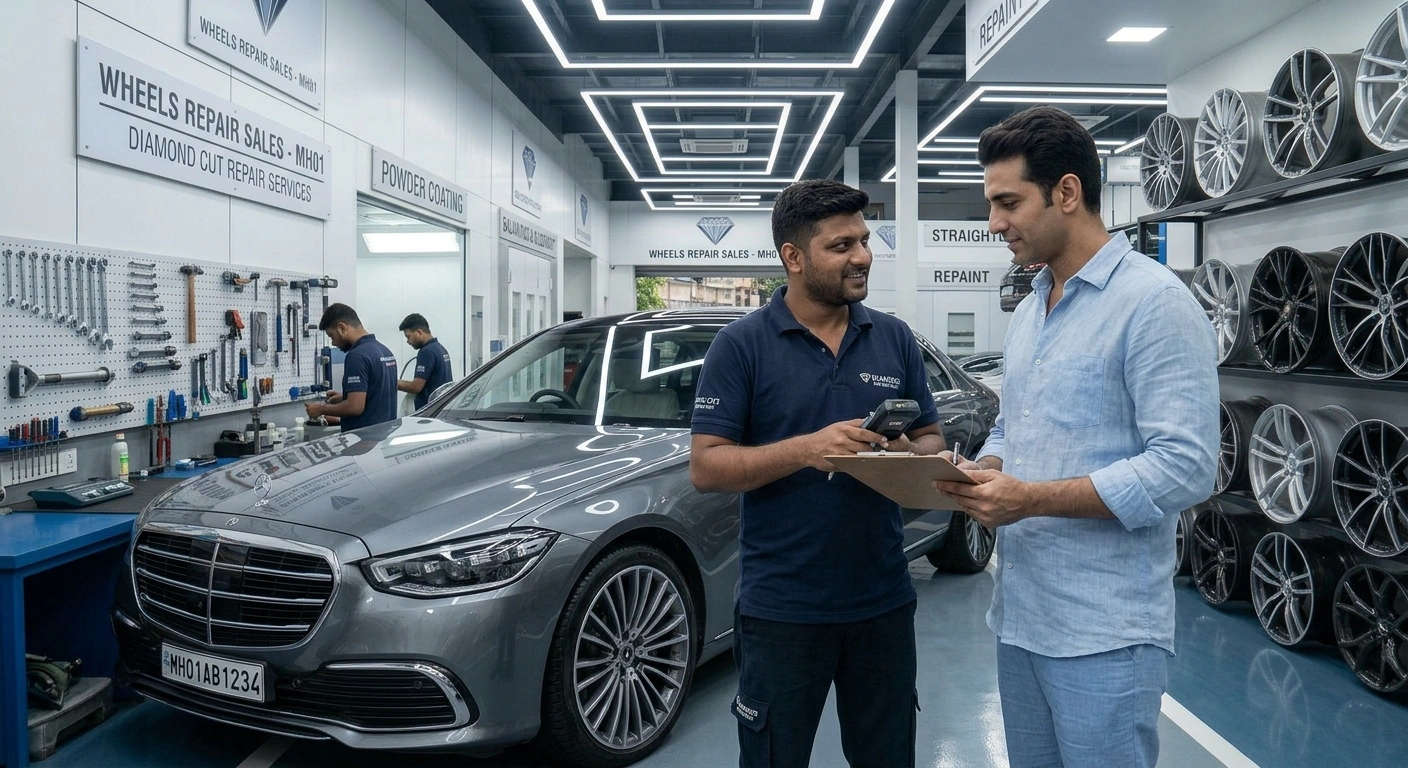
Professional inspection can provide a more accurate assessment of wheel condition.
If repair is appropriate, the technician can recommend a suitable process. If the wheel is too severely damaged, replacement may be the safer choice.
This diagnostic-first approach is an important part of responsible Diamond Cut Alloy Wheel Repair in Mumbai.
When Should You Visit a Diamond Cut Alloy Specialist?
You don’t necessarily need to wait until the wheel looks damaged.
Consider an inspection if:
- Your car recently hit a deep pothole.
- The steering wheel starts vibrating.
- Your tyre repeatedly loses pressure.
- The wheel cannot be balanced properly.
- You notice unusual tyre wear.
- You hear an unusual sound from the wheel area.
- The diamond cut finish has started deteriorating.
- The vehicle feels different after hitting a road obstacle.
Early diagnosis can prevent a small problem from developing into a more expensive tyre, wheel, or suspension issue.
Frequently Asked Questions
Q1. Can a diamond cut alloy wheel be damaged without visible cracks?
Yes. A wheel can develop bends, runout, bead-seat deformation, or other problems without showing a visible crack.
Q2. Can a slightly bent alloy wheel cause vibration?
Yes. Wheel deformation can affect how the wheel and tyre rotate and may contribute to vibration, although tyre, balancing, alignment, and suspension issues can also cause similar symptoms.
Q3. Can a diamond cut alloy cause tyre air leaks?
Yes. If the wheel or bead-seat area is deformed, the tyre may not form a proper airtight seal, resulting in gradual pressure loss.
Q4. How do I know if my diamond cut alloy needs repair?
Warning signs include vibration, repeated air loss, uneven tyre wear, balancing difficulties, or damage following a pothole or kerb impact. Professional inspection provides a more reliable answer.
Q5. Can diamond cut alloy wheels be refinished?
In many cases, cosmetic damage to a diamond cut finish can be professionally restored. The exact process depends on the wheel’s design and the extent of the damage.
A diamond cut alloy wheel does not have to show a dramatic crack or obvious dent to have a problem.
Small bends, runout, bead-seat deformation, balancing issues, and inner-wheel damage can develop after pothole impacts or other road hazards. Some cosmetic problems can also begin subtly before becoming more noticeable.
For Mumbai drivers, paying attention to changes in tyre pressure, steering, vibration, and tyre wear is just as important as checking the visible face of the wheel.
If something feels different after an impact, don’t assume the wheel is fine simply because there is no visible damage.
A professional Diamond Cut Alloy Wheel Repair in Mumbai inspection can help identify the actual problem and determine whether repair, refinishing, or replacement is appropriate.
Author: Areef Shaikh
Last Updated: August 2026
Category: Diamond Cut Alloy Wheel Repair
Social Media: Instagram – @wheelsrepairsales