Alloy wheel damage in Mumbai is a common concern for car owners, especially during the monsoon season when potholes, waterlogged roads and uneven surfaces make driving difficult. A sudden impact with a deep pothole can bend an alloy wheel, cause cracks, damage the tyre or affect your vehicle’s driving performance.
Understanding the causes, warning signs and available repair options can help you prevent further damage and avoid unnecessary replacement costs. In this guide, we explain how Mumbai’s potholes affect car alloy wheels, how to identify damage and when professional alloy wheel repair is necessary.
How Does Alloy Wheel Damage in Mumbai Occur Due to Potholes?
Mumbai experiences heavy traffic, frequent rainfall during the monsoon, and continuous pressure on its road infrastructure. These conditions can contribute to pothole formation and deterioration of road surfaces.
Some common situations where drivers encounter potholes include:
- Monsoon driving: Rainwater can collect in road depressions, making potholes difficult to identify.
- Heavy traffic: Drivers may have limited time to react to potholes, especially in congested areas.
- Construction activity: Road digging and unfinished road repairs can leave uneven surfaces.
- High-speed driving: Hitting a pothole at higher speeds increases the force of impact on the tyre and wheel.
- Poor visibility: Night driving and waterlogged roads make it harder to judge pothole depth.
Unlike steel wheels, alloy wheels are generally made from aluminium-based alloys. They offer an attractive appearance, good heat dissipation, and relatively low weight. However, a sufficiently strong impact can cause an alloy wheel to bend, crack, or develop structural damage.
Important: Not every pothole impact damages an alloy wheel. The severity depends on pothole depth, vehicle speed, tyre pressure, tyre profile, wheel design, and impact angle.
How Mumbai Potholes Affect Car Alloy Wheels
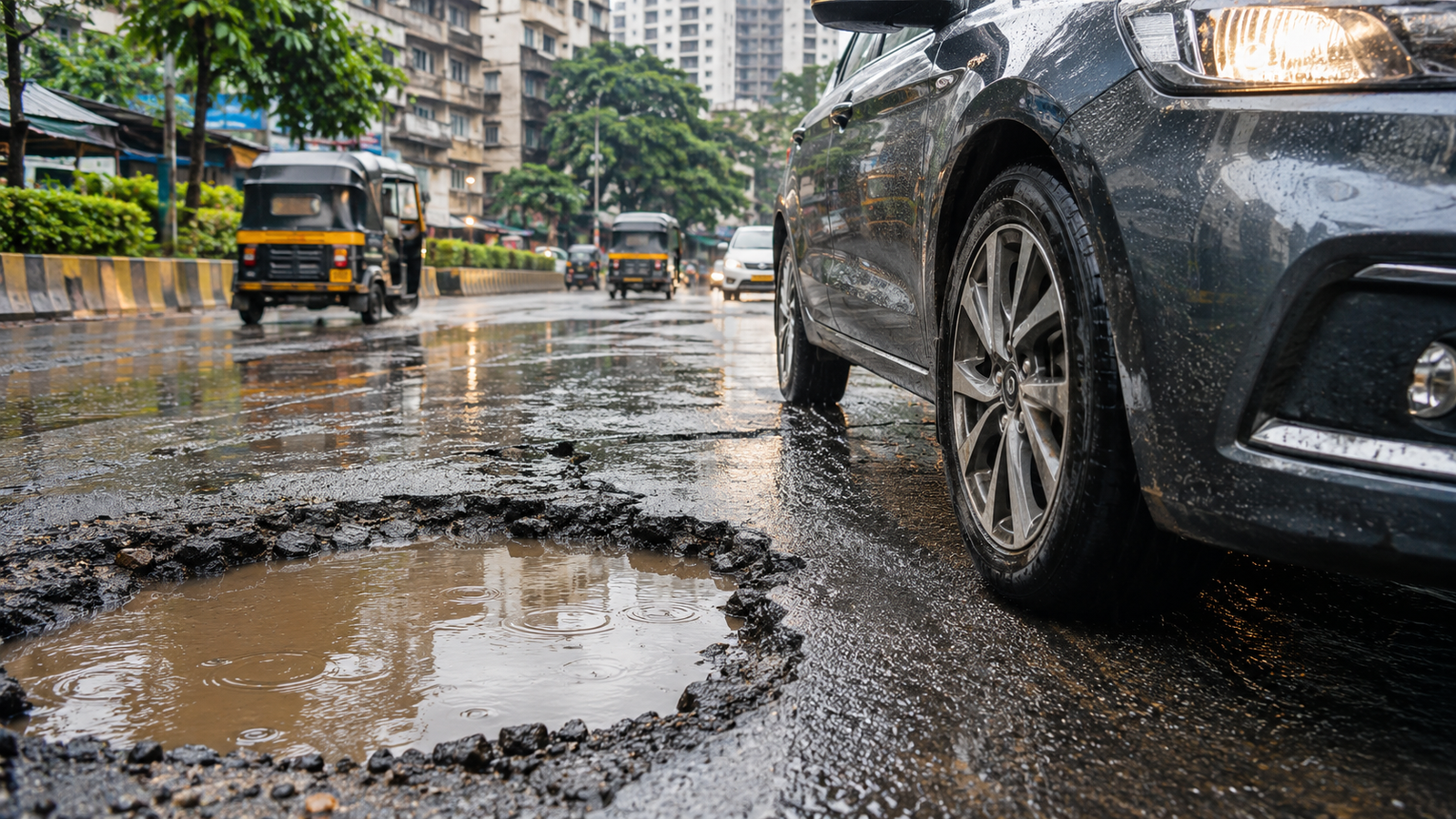
Water-filled potholes can hide road damage and increase the risk of alloy wheel impact.
A realistic view of a car driving on a wet Mumbai road with a pothole, illustrating the risks of monsoon driving for alloy wheels.
How Does Pothole Impact Cause Alloy Wheel Damage in Mumbai?
When a car hits a pothole, the tyre and wheel absorb the impact. The tyre acts as the first protective layer, but if the impact is strong enough, the force can reach the alloy wheel.
Here are the most common types of damage.
A. Bent Alloy Wheels
One of the most common consequences of hitting a pothole is a bent alloy wheel.
When a tyre drops into a pothole and strikes its sharp edge, the wheel can experience sudden pressure. This may deform the inner or outer rim.
Common symptoms include:
- Steering wheel vibration at certain speeds.
- Uneven tyre rotation.
- A slight wobble while driving.
- Air pressure dropping repeatedly.
Minor bends may be repairable through professional alloy wheel straightening, depending on the wheel’s condition and manufacturer specifications.
B. Cracked Alloy Wheels
A strong pothole impact can create cracks in the alloy wheel, particularly around the inner barrel or spoke area.
Cracks are more serious than cosmetic scratches because they can affect the structural strength of the wheel.
Warning signs include:
- Continuous tyre air leakage.
- Visible hairline cracks.
- Sudden tyre pressure loss.
- Unusual vibration while driving.
Cracked wheels require a professional safety assessment. Welding or other repair methods should not automatically be considered safe. Depending on the crack location, wheel construction, and manufacturer guidance, replacement may be the only appropriate option.
C. Scratches and Curb Rash
Sometimes, a pothole impact pushes the wheel towards the road surface, resulting in scratches or damaged paint.
These marks are usually cosmetic, but deeper damage can expose the underlying metal and affect the wheel’s finish.
Professional alloy wheel refurbishment can restore the appearance of many cosmetically damaged wheels.
D. Damaged Diamond-Cut Finish
Diamond-cut alloy wheels have a distinctive machined surface with a shiny metallic appearance.
A pothole impact can cause:
- Scratches on the machined face.
- Chipped lacquer coating.
- Damaged edges.
- Visible surface marks.
These wheels may require specialist diamond-cut alloy wheel repair to restore their original appearance.
Common Types of Alloy Wheel Damage
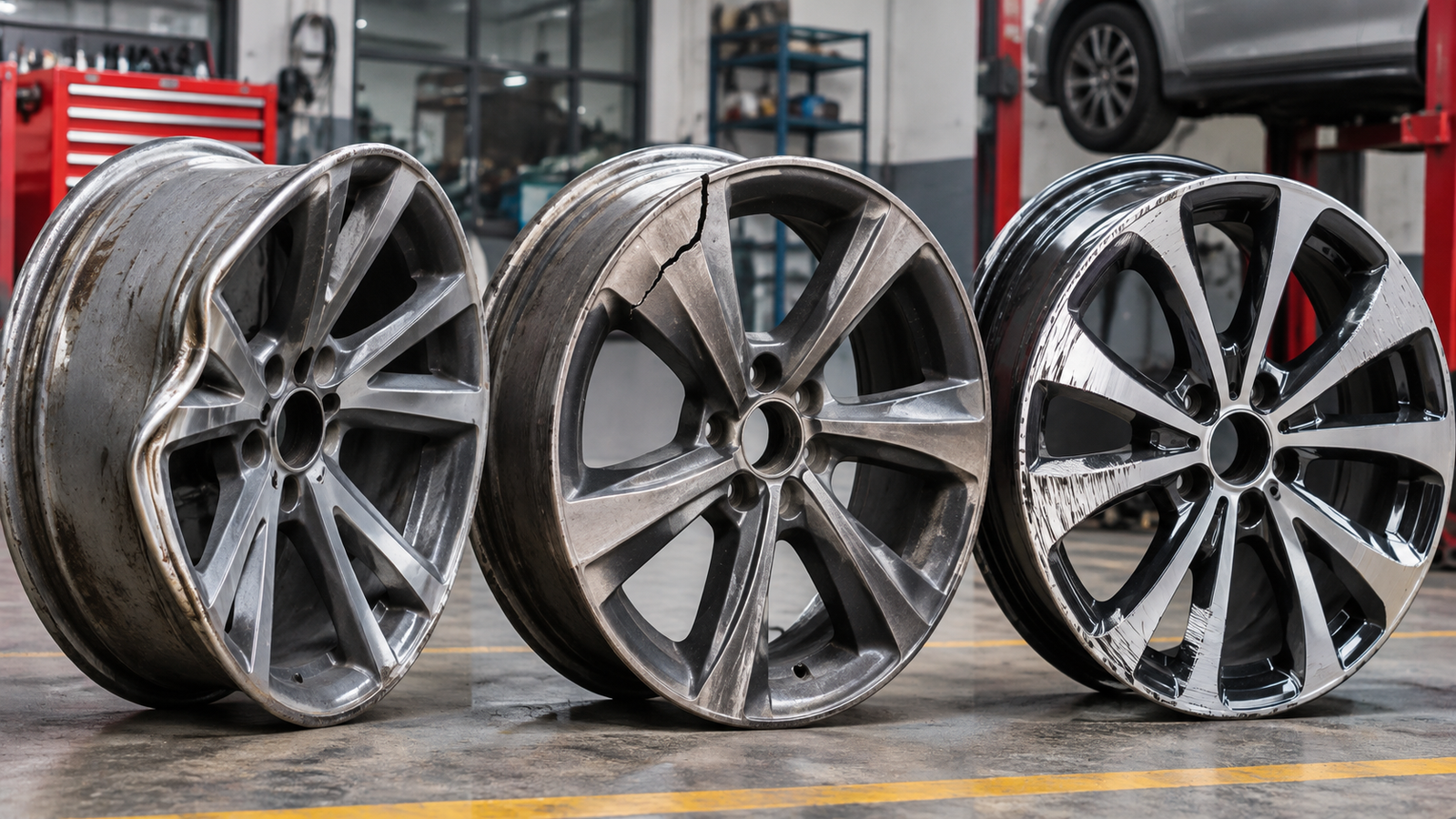
Pothole impacts can cause bent rims, structural cracks and scratches on alloy wheels.
A comparison of common alloy wheel damage that car owners may experience after driving over potholes.
What Are the Warning Signs That Your Alloy Wheel Is Damaged?
Many drivers continue using their cars after hitting a pothole because the damage is not always visible immediately. However, certain symptoms can indicate that the alloy wheel needs inspection.
Look out for these warning signs:
| Warning sign | Possible problem |
|---|---|
| Steering wheel vibration | Bent wheel or tyre imbalance |
| Repeated air pressure loss | Rim damage, crack or tyre damage |
| Vehicle pulling to one side | Wheel alignment or suspension issue |
| Unusual tyre wear | Alignment, balancing or suspension problem |
| Visible rim deformation | Bent alloy wheel |
| Cracks around the wheel | Possible structural damage |
How to Identify Alloy Wheel Damage After Hitting a Pothole?
Follow these simple steps:
- Park your car safely on level ground.
- Visually inspect the outer alloy wheel for scratches, dents or cracks.
- Check the tyre sidewall for bulges, cuts or visible damage.
- Check tyre pressure using a reliable pressure gauge.
- Pay attention to vibrations or unusual sounds during your next drive.
Safety tip: If you notice a visible crack, tyre bulge, rapid air loss, or severe vibration, avoid driving further. Arrange a professional inspection or roadside assistance. Do not assume that a wheel is safe simply because it is holding air.
Can a Bent Alloy Wheel Be Repaired?
Yes, some bent alloy wheels can be repaired, but the possibility depends on the severity and location of the damage.
Professional alloy wheel repair specialists inspect the wheel to determine whether it can safely return to service.
What Happens During Professional Alloy Wheel Straightening?
The typical repair process involves:
- Wheel inspection: The technician examines the wheel for deformation, cracks and other damage.
- Damage assessment: Specialised equipment helps identify the extent and location of the bend.
- Straightening: If the wheel is suitable for repair, controlled equipment is used to correct the deformation.
- Balancing: The repaired wheel is checked and balanced to reduce vibration.
- Final inspection: The technician checks the wheel for remaining defects before it is returned to service.
Not every bent wheel is repairable. Severe deformation, cracks in critical areas, or damage to the spokes may make replacement necessary.
Professional Alloy Wheel Straightening
Specialised equipment helps technicians assess and correct repairable alloy wheel bends.
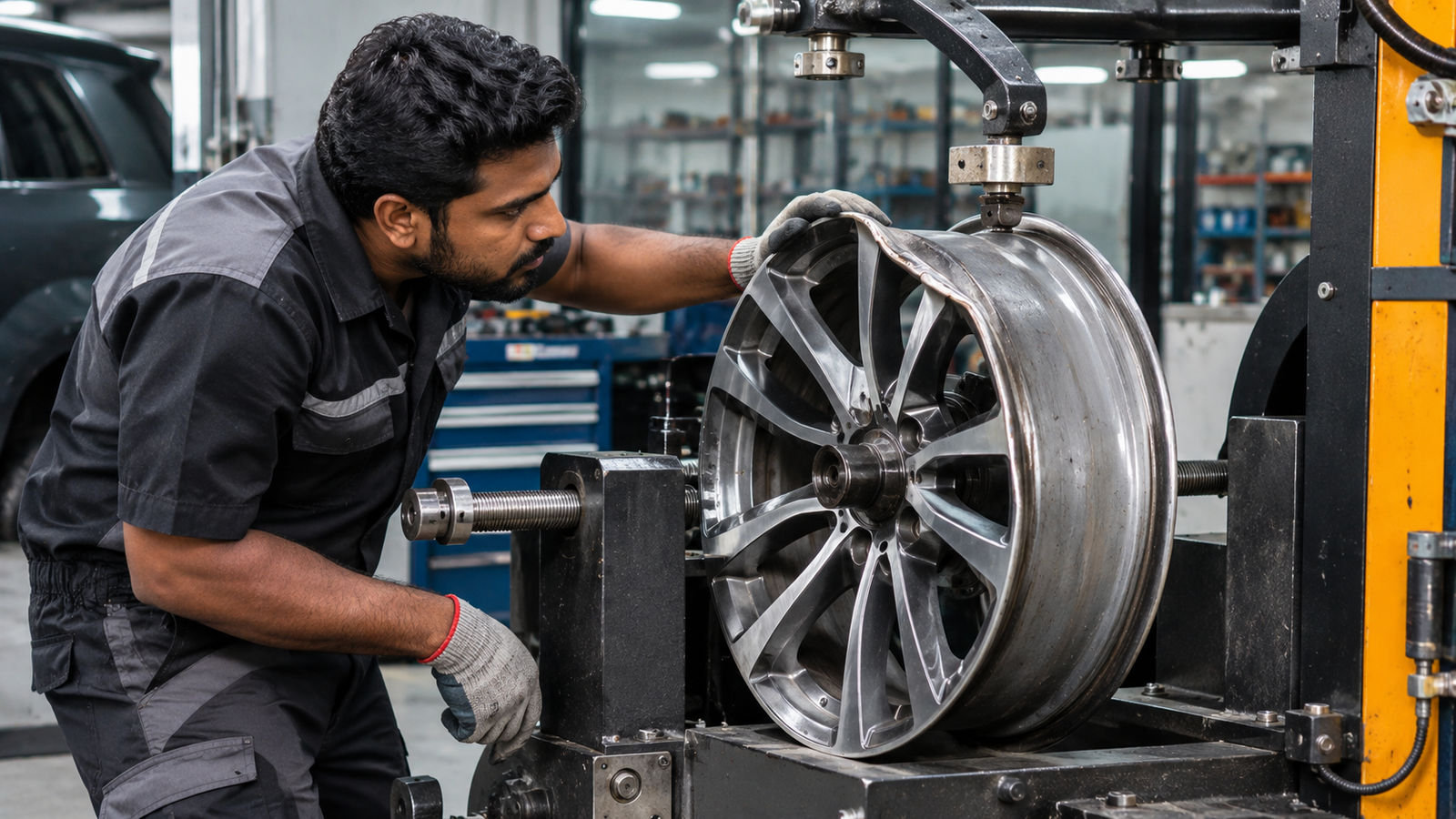
A professional alloy wheel repair process showing a technician using specialised machinery to inspect and straighten a damaged aluminium wheel.
How to Fix Alloy Wheel Damage in Mumbai?
The repair method depends on whether the damage is structural or cosmetic.
A. Cracked Alloy Wheel Repair
A cracked alloy wheel needs careful inspection because the damage may affect its structural integrity.
A professional technician should check:
- The location of the crack.
- The depth and length of the damage.
- Whether the crack extends into a spoke or mounting area.
- The wheel manufacturer’s repair recommendations.
Although some workshops offer aluminium alloy welding, welding does not automatically make a cracked wheel safe. Certain cracks cannot be reliably repaired, and replacing the wheel is often the safer choice.
Never choose a repair method based only on its low cost.
B. Alloy Wheel Scratch Repair
Scratches and surface damage are generally easier to address than structural defects.
The usual refurbishment process includes:
- Cleaning the alloy wheel.
- Removing damaged paint or surface coating.
- Preparing and smoothing the affected area.
- Applying the appropriate primer and finish.
- Repainting or refinishing the wheel.
- Allowing the coating to cure properly.
This process can improve the appearance of scratched alloy wheels and protect the refinished surface.
C. Diamond-Cut Alloy Wheel Repair
Diamond-cut alloy wheels require specialist equipment because their surface has a distinctive machined finish.
The process generally involves:
- Removing the wheel’s existing damaged coating.
- Preparing the surface.
- Machining the wheel face using a suitable diamond-cut lathe.
- Applying a protective lacquer coating.
- Inspecting the final finish.
However, repeated machining can remove material from the wheel. The technician must confirm that the wheel can be safely refinished within the manufacturer’s limits.
Diamond-Cut Alloy Wheel Repair Process
Precision machining helps restore the original appearance of suitable diamond-cut alloy wheels.
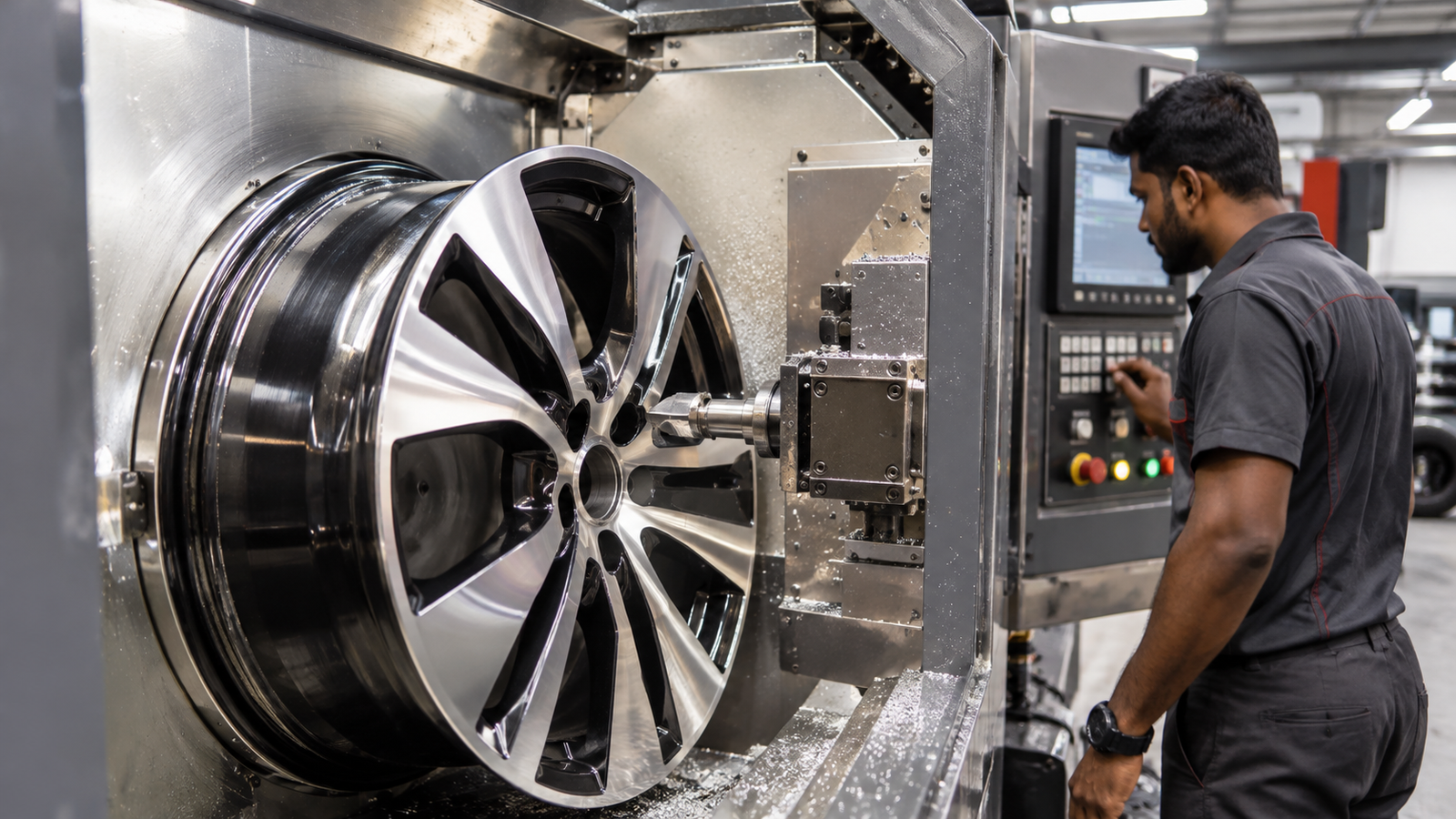
A specialist diamond-cut alloy wheel refurbishment process showing the machined wheel face and precision workshop equipment.
How Much Does Alloy Wheel Repair Cost in Mumbai?
The cost of alloy wheel repair in Mumbai depends on the type of damage, wheel size, design, finish and repair complexity.
For example, repairing a minor scratch is generally less complicated than correcting a bent rim or refurbishing a diamond-cut alloy wheel.
Here are the main factors that influence repair costs:
| Repair type | Factors affecting cost |
|---|---|
| Alloy wheel scratch repair | Damage area and paint finish |
| Alloy wheel straightening | Severity and location of bend |
| Diamond-cut alloy repair | Wheel design and machining requirements |
| Alloy wheel repainting | Colour, coating and preparation |
| Wheel replacement | Wheel size, brand and availability |
Is Alloy Wheel Repair More Affordable Than Replacement in Mumbai?
For suitable cosmetic damage and repairable bends, professional repair may cost less than buying a new alloy wheel.
However, replacement is the better option when the wheel has serious structural damage or cannot be safely restored.
Practical advice: Get the wheel inspected before deciding. Ask the workshop for a breakdown of inspection, repair, refinishing and balancing costs. Compare the repair cost with the price of a suitable replacement wheel.
How Can Mumbai Car Owners Protect Their Alloy Wheels from Potholes?
Although potholes cannot always be avoided, a few driving habits can reduce the chances of alloy wheel damage.
Practical Tips to Prevent Alloy Wheel Damage
- Reduce speed during monsoons: Drive slowly on unfamiliar or waterlogged roads.
- Maintain correct tyre pressure: Follow the vehicle manufacturer’s recommended tyre pressure.
- Keep a safe distance: Maintain enough space from the vehicle ahead to identify potholes early.
- Avoid sudden steering movements: Do not make dangerous last-minute turns to avoid potholes.
- Inspect tyres regularly: Check for bulges, cuts and uneven wear.
- Avoid overloading your vehicle: Excessive weight can increase the stress on tyres and wheels.
- Get regular wheel checks: Include tyre balancing, alignment and wheel inspections in your maintenance routine.
Why is tyre pressure important?
Tyres provide a protective cushion between the road and the alloy wheel. Incorrect tyre pressure can affect how effectively they absorb road impacts.
Underinflated tyres may offer less protection against rim impact, while excessively inflated tyres can also affect ride comfort and handling.
Always follow the manufacturer’s recommended cold tyre pressure rather than guessing or relying on a generic pressure figure.
Checking car tyre pressure to help protect alloy wheels from pothole damage
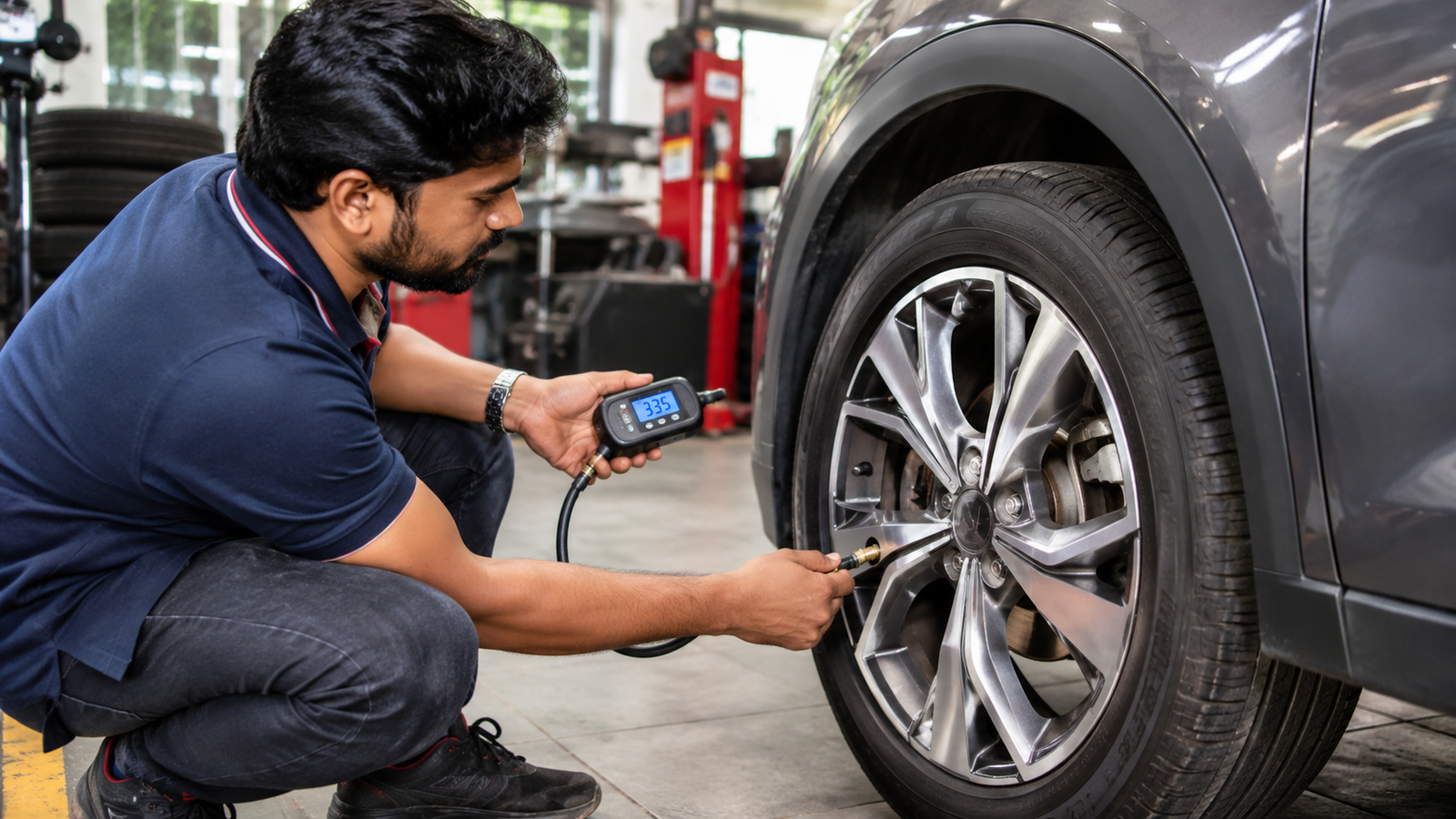
Maintaining the recommended tyre pressure is an important part of protecting your car’s wheels.
A car owner checking tyre pressure at an automotive service centre as part of regular vehicle maintenance.
Where Can You Get Professional Alloy Wheel Repair in Mumbai?
If your car’s alloy wheels have been damaged by potholes, choosing an experienced repair specialist is important.
A professional alloy wheel repair workshop should offer:
- Proper wheel damage inspection.
- Specialised alloy wheel straightening equipment.
- Professional cosmetic refurbishment.
- Diamond-cut alloy wheel repair facilities, where applicable.
- Wheel balancing after suitable repairs.
- Clear advice on whether repair or replacement is safer.
For car owners in Mumbai, it is worth choosing a workshop that understands different alloy wheel designs and can assess both cosmetic and structural damage.
Before handing over your wheels, ask the technician to explain the damage, proposed repair method, safety considerations and expected cost.
Professional Alloy Wheel Repair Services in Mumbai
Professional inspection and specialist equipment are important for quality alloy wheel repair.
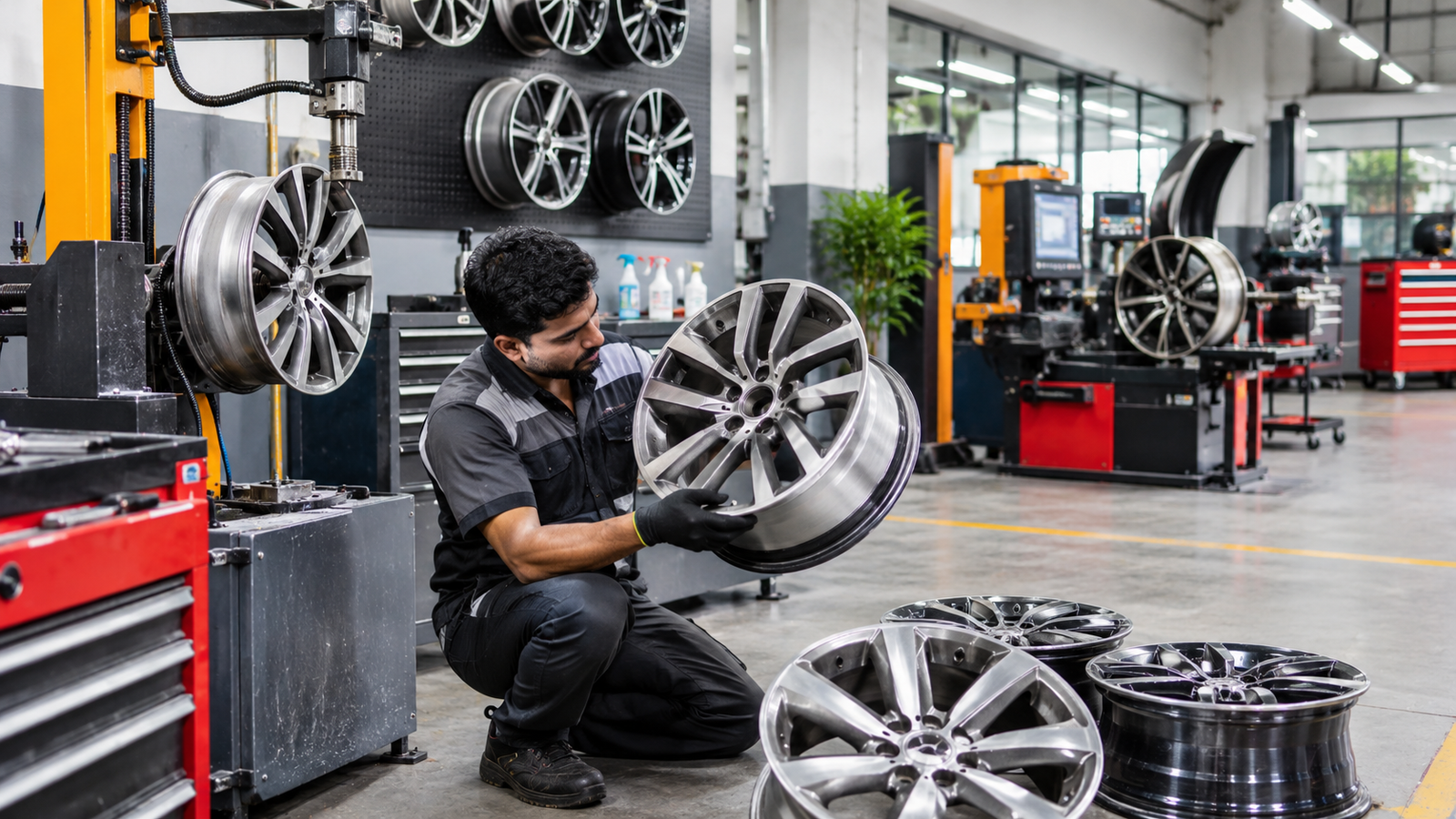
A modern alloy wheel repair workshop showing technicians, repair equipment and refurbished aluminium alloy wheels.
FAQs About Alloy Wheel Damage in Mumbai
1. Can potholes damage car alloy wheels?
Yes. Hitting a pothole can bend, crack or scratch an alloy wheel. The severity depends on the pothole’s depth, vehicle speed, tyre pressure and impact angle.
2. How do I know if my alloy wheel is bent?
Common symptoms include steering wheel vibration, uneven tyre rotation, repeated air pressure loss and visible deformation around the rim. A professional inspection can confirm the damage.
3. Can a cracked alloy wheel be repaired?
Some workshops offer aluminium welding, but not every cracked alloy wheel can be safely repaired. Cracks in critical structural areas may require complete wheel replacement. Always follow professional safety recommendations.
4. How much does alloy wheel repair cost in Mumbai?
The cost varies depending on the damage, wheel size, design and finish. Scratch repair, straightening and diamond-cut refurbishment have different requirements. Request an inspection and quotation before proceeding.
5. Is it safe to drive with a bent alloy wheel?
Driving with a bent alloy wheel can cause vibrations, air leakage and handling problems. Severe damage can increase the risk of tyre failure. Get the wheel inspected before continuing to drive.
6. Can diamond-cut alloy wheels be repaired after hitting a pothole?
Yes, suitable diamond-cut alloy wheels can often be professionally refinished using precision machining. However, the technician must check the remaining material thickness and ensure that refinishing is within safe limits.
7. Does wheel balancing fix pothole damage?
Wheel balancing corrects weight distribution to reduce vibrations. It does not repair a bent or cracked alloy wheel. The underlying damage must be inspected and addressed separately.
Conclusion
Mumbai’s potholes can cause more than temporary driving discomfort. A sudden impact can damage car alloy wheels, affect tyre performance, create steering vibrations and lead to expensive repairs if ignored.
The best approach is to identify damage early and get your wheels professionally inspected. Minor scratches and certain bends may be repairable, while serious structural damage may require replacement.
Regular tyre pressure checks, careful driving during the monsoon and timely wheel inspections can help protect your vehicle.
Whether you need alloy wheel straightening, scratch removal, diamond-cut alloy refurbishment or a professional damage assessment, choosing the right repair specialist can help keep your car safe and your wheels in good condition.