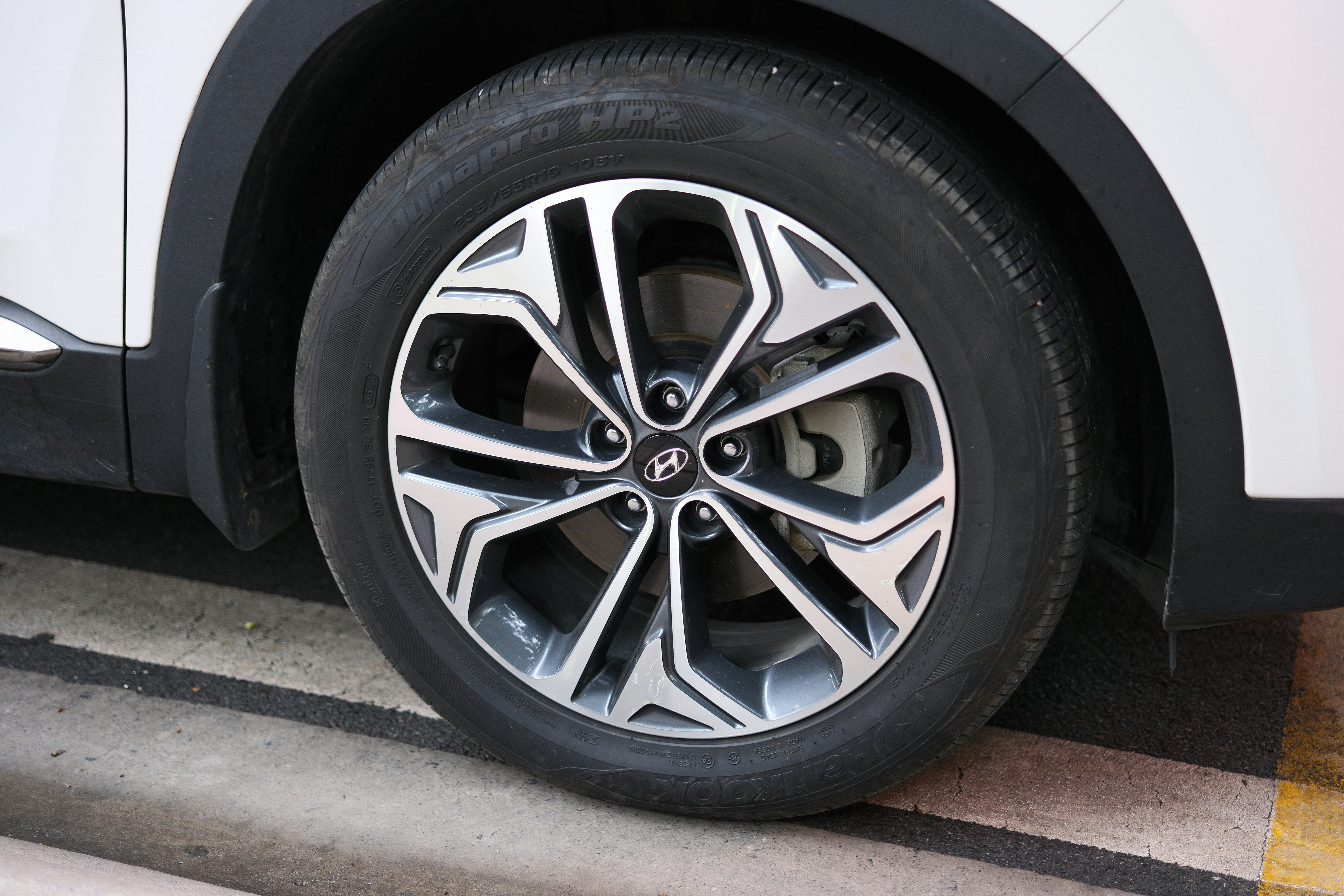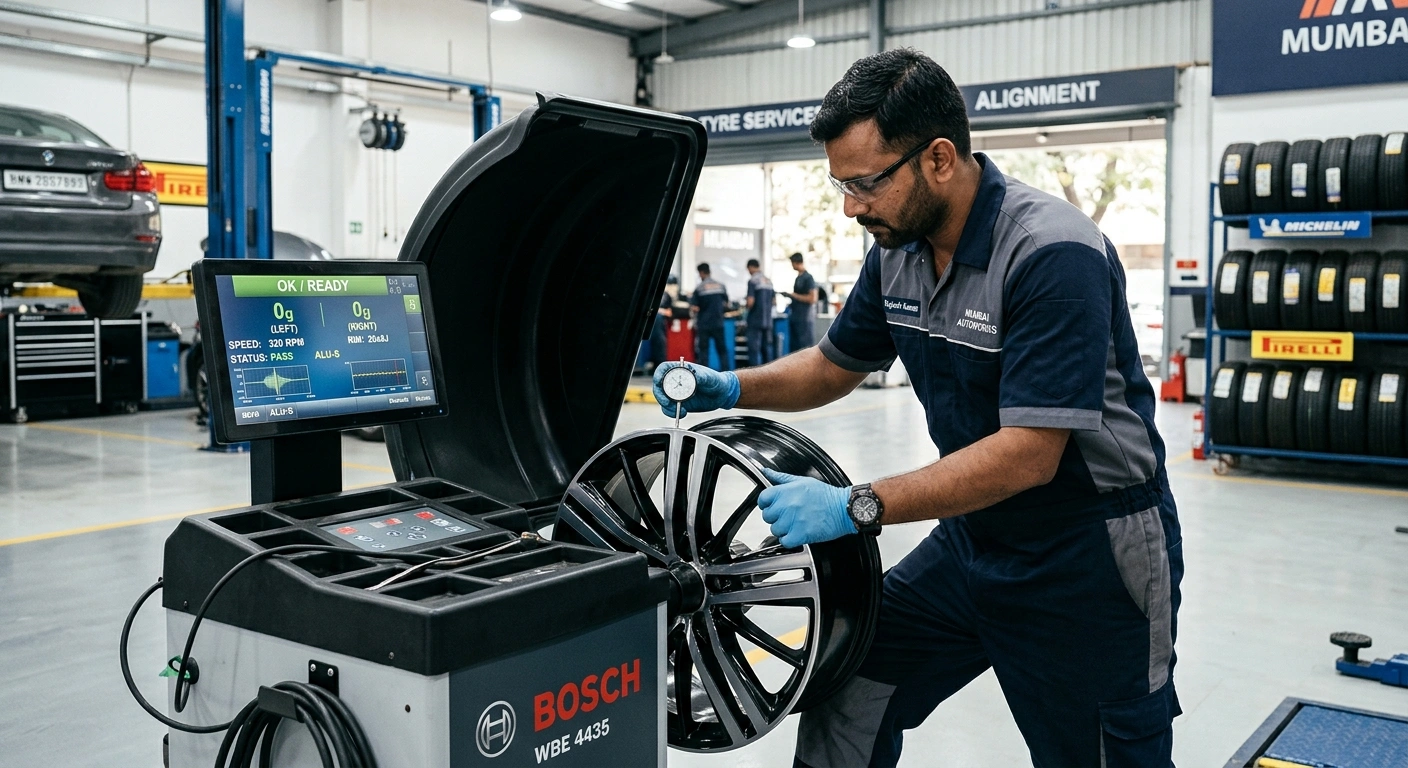
You have had your car wheels balanced, but the steering wheel still vibrates. It can be frustrating because wheel balancing is usually one of the first things people try when a vehicle develops vibration.
However, balancing is not designed to fix every wheel or tyre problem.
A bent diamond cut alloy, excessive wheel runout, tyre damage, incorrect tyre seating, wheel alignment issues, or suspension problems can all cause vibration even after balancing has been completed.
This is why Diamond Cut Alloy Wheel Vibration Repair in Mumbai should start with accurate diagnosis rather than simply adding more balancing weights.
Yes. A damaged or deformed diamond cut alloy can cause vibration after wheel balancing. If vibration continues, the wheel, tyre, runout, alignment, and suspension should be inspected to identify the actual cause.
Why Can a Car Vibrate After Wheel Balancing?
Wheel balancing corrects uneven weight distribution in the wheel and tyre assembly.
But imagine a wheel that has physically changed shape. Adding balancing weights can correct weight imbalance, but it cannot necessarily restore a bent or deformed wheel to its original shape.
Possible causes of continued vibration include:
- Bent diamond cut alloy
- Excessive wheel runout
- Damaged tyre
- Incorrect tyre seating
- Uneven tyre wear
- Wheel alignment problems
- Suspension component wear
- Steering system problems
If balancing has already been performed but the vibration remains, professional Diamond Cut Alloy Wheel Vibration Repair in Mumbai should involve a complete wheel and tyre inspection.
Wheel balancing corrects weight imbalance. It does not automatically repair a bent wheel, tyre defect, excessive runout, or suspension problem.
Could the Diamond Cut Alloy Be the Problem?
Yes, especially if the vibration started after hitting a pothole, kerb, speed breaker, or another road obstacle.
A diamond cut alloy wheel can become slightly bent without showing an obvious crack. Damage may occur on the inner rim edge or barrel, making it difficult to notice while the wheel is mounted on the car.
Possible warning signs include:
- Steering wheel vibration
- Vibration at certain speeds
- Repeated balancing problems
- Uneven tyre wear
- Changes in ride comfort
- Slow tyre pressure loss
- Visible impact or kerb damage
If vibration began after a strong road impact, the diamond cut alloy should be inspected even if it looks normal from the outside.
How Wheel Runout Can Cause Vibration
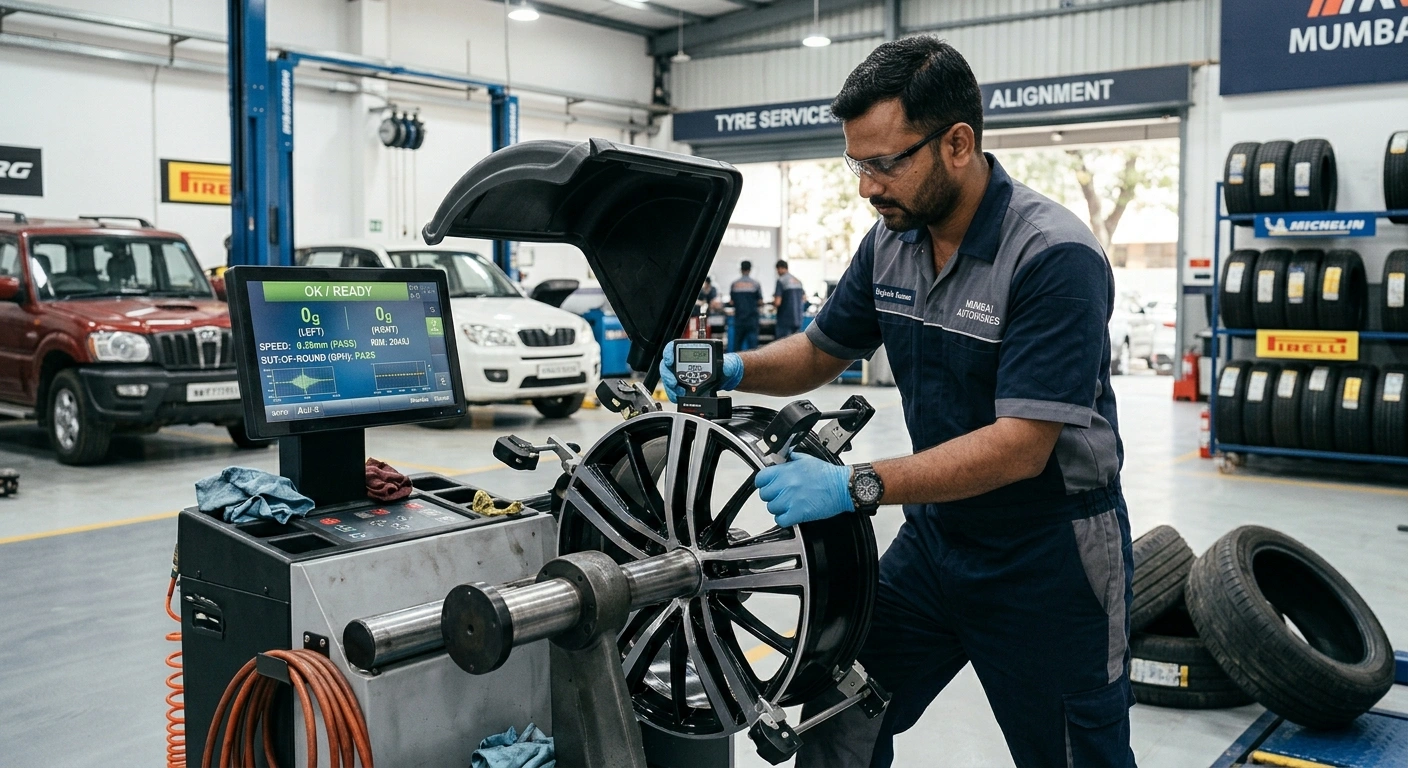
Wheel runout describes how much a wheel deviates from its intended path while rotating.
There are two main types.
Radial Runout
The wheel moves slightly up and down as it rotates.
Lateral Runout
The wheel moves slightly from side to side while rotating.
Excessive runout can create repeated movement through the tyre and suspension system.
A technician can measure runout with specialised equipment. This provides a more reliable diagnosis than simply looking at the wheel while it is stationary.
If excessive deformation is confirmed, Diamond Cut Alloy Wheel Vibration Repair in Mumbai may involve professional wheel repair, depending on the severity and construction of the wheel.
Could the Tyre Be Causing the Vibration?
Absolutely. The diamond cut alloy is not always the cause.
A tyre can develop problems that create vibration even when the wheel itself is in good condition.
Possible tyre-related causes include:
- Internal structural damage
- Uneven tread wear
- Flat spots
- Incorrect seating
- Irregular tyre shape
- Sidewall damage
This is why a proper inspection should evaluate the complete wheel and tyre assembly rather than assuming the alloy wheel is responsible.
Why Mumbai Roads Can Affect Diamond Cut Alloy Wheels
Mumbai drivers regularly deal with potholes, uneven roads, road construction, speed breakers, and waterlogged roads during the monsoon.
A deep pothole can transfer significant impact force through the tyre and directly into the wheel.
The result may include:
- Bent rim
- Wheel runout
- Tyre damage
- Alignment changes
- Suspension damage
The damage may not always be visible immediately.
If your car begins vibrating after hitting a pothole, don’t ignore the change simply because the wheel looks fine.

How Do Professionals Diagnose Diamond Cut Alloy Vibration?
A proper inspection may include several checks.
1. Wheel Balancing
The technician confirms that the wheel and tyre have been correctly balanced.
2. Visual Wheel Inspection
The wheel is checked for cracks, bends, dents, kerb damage and other abnormalities.
3. Runout Measurement
The wheel is rotated using appropriate equipment to identify radial and lateral deviation.
4. Tyre Inspection
The tyre is checked for tread wear, structural damage, seating problems and other defects.
5. Wheel Alignment
Alignment may be checked if the symptoms indicate a geometry issue.
6. Suspension Inspection
Suspension and steering components can be examined when necessary.
This diagnostic approach makes Diamond Cut Alloy Wheel Vibration Repair in Mumbai more effective because it identifies the actual source of the vibration.
Can a Bent Diamond Cut Alloy Be Repaired?
In some cases, yes.
Repairability depends on factors such as:
- Wheel construction
- Wheel material
- Location of the damage
- Severity of deformation
- Presence of cracks
- Overall structural condition
- Manufacturer considerations
A minor and suitable bend may sometimes be corrected using specialised equipment.
However, serious structural damage may make replacement the safer option.
A professional technician should inspect the wheel before recommending repair.
Some bent diamond cut alloy wheels may be repairable, while severe structural damage may require replacement.
What Happens During Diamond Cut Alloy Repair?
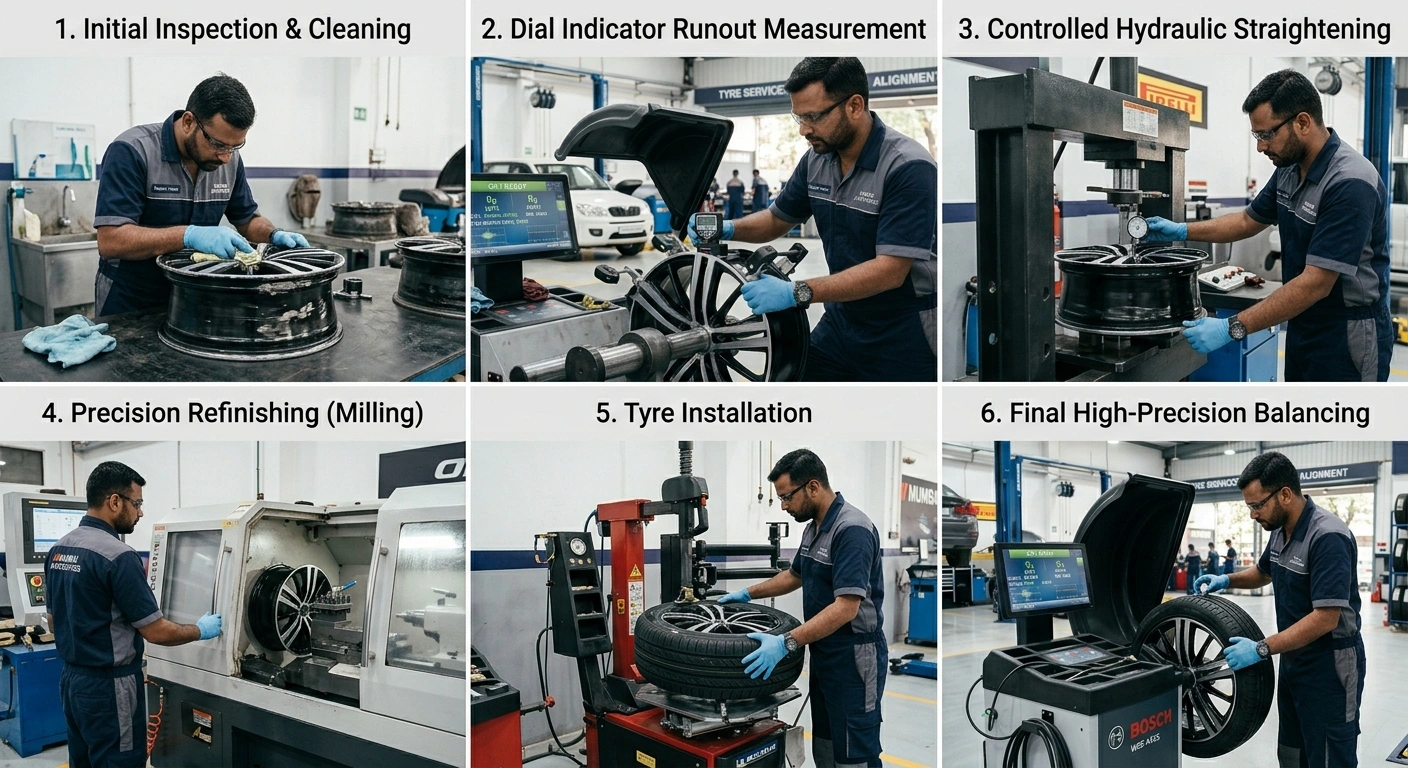
A professional process may include:
Step 1: Initial Inspection
The wheel and tyre are examined for visible and hidden problems.
Step 2: Tyre Removal
The tyre may be removed so the inner rim and barrel can be inspected.
Step 3: Runout Testing
The wheel is measured for radial and lateral deviation.
Step 4: Damage Assessment
The technician determines whether the damage is suitable for repair.
Step 5: Controlled Wheel Repair
If appropriate, specialised equipment is used to restore the wheel’s shape.
Step 6: Final Inspection
The wheel is checked again after repair.
Step 7: Tyre Installation and Balancing
The tyre is reinstalled and the complete assembly is balanced.
For cosmetic diamond cut damage, additional refinishing or machining may also be required to restore the original appearance.
This systematic process is an important part of Diamond Cut Alloy Wheel Vibration Repair in Mumbai.
When Should You Get Your Diamond Cut Alloy Checked?
Consider professional inspection if:
- Vibration continues after balancing.
- Your steering wheel shakes at certain speeds.
- You recently hit a deep pothole.
- The vehicle feels different after an impact.
- The tyre shows unusual wear.
- Balancing has been performed more than once.
- The tyre repeatedly loses pressure.
- You notice damage around the rim edge.
Early diagnosis can help prevent additional tyre, wheel, alignment, or suspension problems.
Frequently Asked Questions
Q1. Can a diamond cut alloy cause vibration after balancing?
Yes. A bent or deformed diamond cut alloy can cause vibration even after the wheel has been balanced.
Q2. Does wheel balancing fix a bent diamond cut alloy?
No, not necessarily. Balancing corrects weight distribution, while wheel deformation requires separate inspection and potentially professional repair.
Q3. How can I tell if my diamond cut alloy is bent?
Common signs include vibration, repeated balancing problems, uneven tyre wear, or symptoms that started after a pothole or kerb impact. Runout measurement provides a more reliable diagnosis.
Q4. Can potholes damage diamond cut alloy wheels?
Yes. Strong pothole impacts can deform wheels and damage tyres. Alignment and suspension components can also be affected.
Q5. Is persistent wheel vibration dangerous?
It should not be ignored. Vibration can be related to a wheel, tyre, alignment, steering, or suspension problem and should be professionally assessed.
If your car continues to vibrate after wheel balancing, don’t immediately assume that more balancing weights are needed.
The diamond cut alloy itself may be bent or deformed. The tyre, wheel runout, alignment, suspension, or steering components may also be responsible.
For Mumbai drivers, potholes and uneven roads make wheel impacts a realistic possibility.
The right approach to Diamond Cut Alloy Wheel Vibration Repair in Mumbai is to inspect the complete wheel and tyre assembly before deciding whether repair or replacement is required.
Author: Areef Shaikh
Last Updated: August 2026
Category: Mag Wheel Repair & Wheel Balancing
Social Media: Instagram – @wheelsrepairsales