Have you ever felt your steering wheel vibrating even though your tyres look perfectly fine? Or perhaps your car feels slightly uncomfortable at higher speeds despite having recently completed wheel balancing?
One possible reason is alloy wheel runout.
Wheel runout occurs when an alloy wheel does not rotate perfectly within its intended path. The deviation may be very small, but it can affect tyre movement, steering feel, ride comfort, and overall driving performance.
Potholes, uneven roads, kerb impacts, speed breakers, and accidental impacts can contribute to wheel deformation. For Mumbai drivers, these road conditions make regular wheel and tyre inspection particularly important.
If you are experiencing unexplained vibration or handling changes, understanding Alloy Wheel Runout in Mumbai can help you identify whether your wheel may need professional inspection or repair.
Alloy wheel runout is a deviation in the wheel’s rotation caused by deformation or other wheel-related issues. Excessive runout can contribute to vibration, uneven tyre movement, balancing problems, tyre wear, and reduced driving comfort.
What Is Alloy Wheel Runout?
Alloy wheel runout refers to the amount by which a wheel deviates from its intended circular or straight path as it rotates.
Ideally, a wheel should rotate smoothly around its centre without excessive movement. When the wheel has been bent, deformed, or affected by an impact, it may move slightly away from this ideal path.
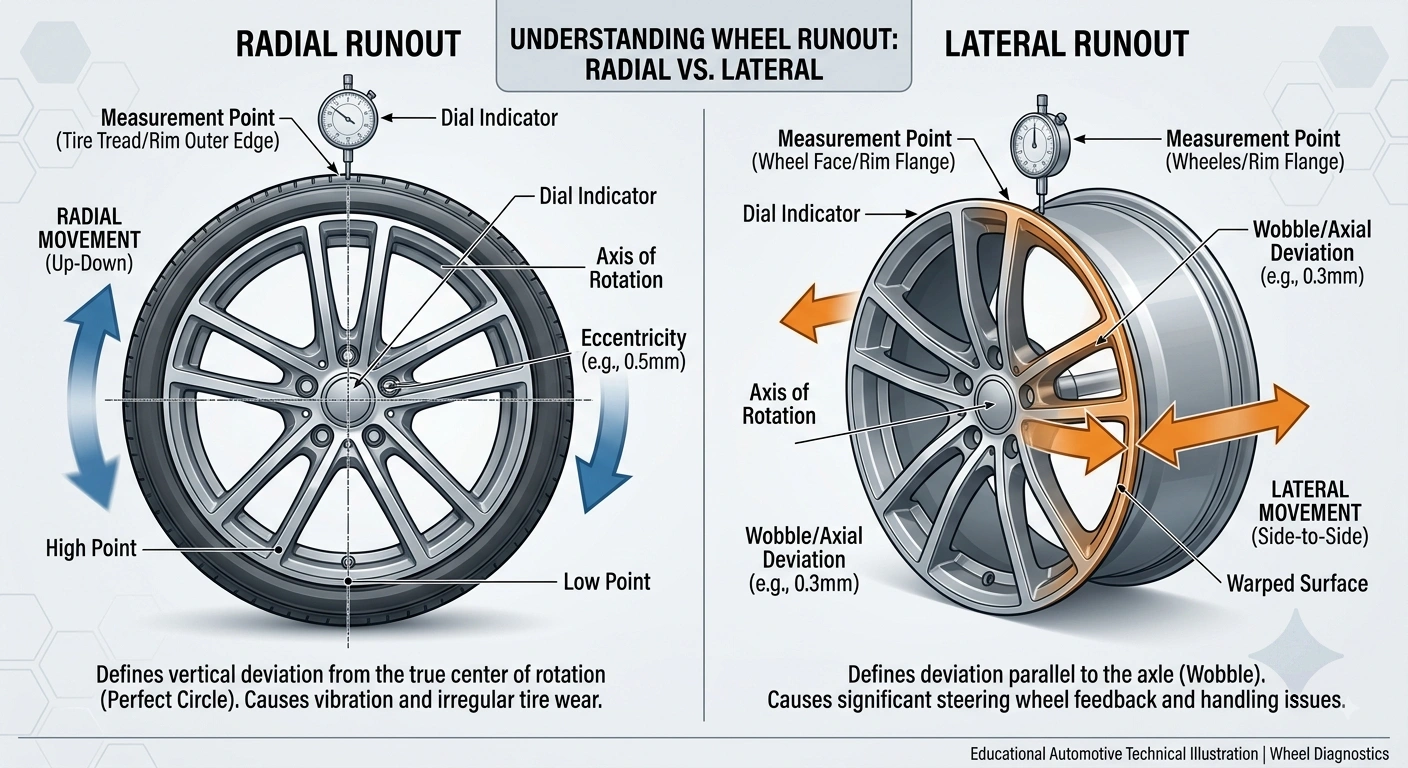
There are two main types of wheel runout:
- Radial runout: Up-and-down deviation during rotation
- Lateral runout: Side-to-side deviation during rotation
Both can affect the way the tyre and wheel assembly behave on the road.
Wheel runout is measurable deviation from the wheel’s intended rotational path. Excessive radial or lateral runout can cause vibration and affect tyre and vehicle performance.
Radial Runout vs Lateral Runout
Understanding the difference helps explain why a wheel may feel different while driving.
Radial Runout
Radial runout occurs when the wheel moves slightly closer to or farther away from the centre of rotation as it spins.
In simple terms, the wheel can behave as though it is slightly oval rather than perfectly circular.
This can contribute to:
- Vertical vibration
- Uneven tyre movement
- Irregular road contact
- Ride discomfort
Lateral Runout
Lateral runout is side-to-side movement while the wheel rotates.
It can contribute to:
- Steering vibration
- Side-to-side tyre movement
- Handling changes
- Uneven tyre wear
A professional inspection can measure both conditions and determine whether the wheel remains within acceptable limits for the vehicle and wheel design.
What Causes Alloy Wheel Runout?
Several situations can contribute to excessive wheel runout.
1. Pothole Impacts
A deep pothole can create a sudden impact between the tyre, wheel, and road surface.
2. Kerb Impacts
Hitting a kerb while parking or turning can deform the rim edge.
3. Speed Breakers
Taking a speed breaker at excessive speed can transfer significant force to the wheel and suspension.
4. Road Construction
Uneven surfaces, broken roads, and construction areas can increase impact risk.
5. Minor Accidents
Even a relatively small collision can affect wheel geometry.
6. Previous Wheel Damage
A wheel that has already been bent or poorly repaired may continue to show runout.
7. Tyre-Related Problems
Not every runout-like symptom originates from the wheel. A damaged or improperly seated tyre can also contribute to vibration and uneven rotation.
This is why Alloy Wheel Runout in Mumbai should be diagnosed rather than assumed based only on symptoms.
How Does Alloy Wheel Runout Affect Driving Performance?
Excessive runout can influence several aspects of vehicle performance.
Steering Vibration
One of the most noticeable symptoms is vibration through the steering wheel.
You may feel the vibration more strongly at particular speeds. However, steering vibration can have several causes, so wheel runout should be confirmed through proper inspection.
Ride Comfort
A wheel that does not rotate smoothly can create repeated movement through the tyre and suspension system.
The result may be a ride that feels less smooth than usual.
Tyre Contact
Excessive wheel deformation can affect how consistently the tyre contacts the road.
This can potentially contribute to irregular tyre wear and reduced driving comfort.
Excessive wheel runout can make a vehicle feel unstable or uncomfortable because the wheel and tyre assembly do not rotate as smoothly as intended.
Can Alloy Wheel Runout Cause Uneven Tyre Wear?
It can contribute to irregular tyre behaviour, although uneven tyre wear has many possible causes.
Other causes include:
- Incorrect wheel alignment
- Incorrect tyre pressure
- Worn suspension components
- Improper wheel balancing
- Tyre defects
- Aggressive driving
- Suspension geometry issues
If unusual tyre wear appears together with vibration after a pothole impact, inspecting the wheel can be useful.
A professional technician should assess the complete wheel and tyre assembly rather than immediately blaming one component.
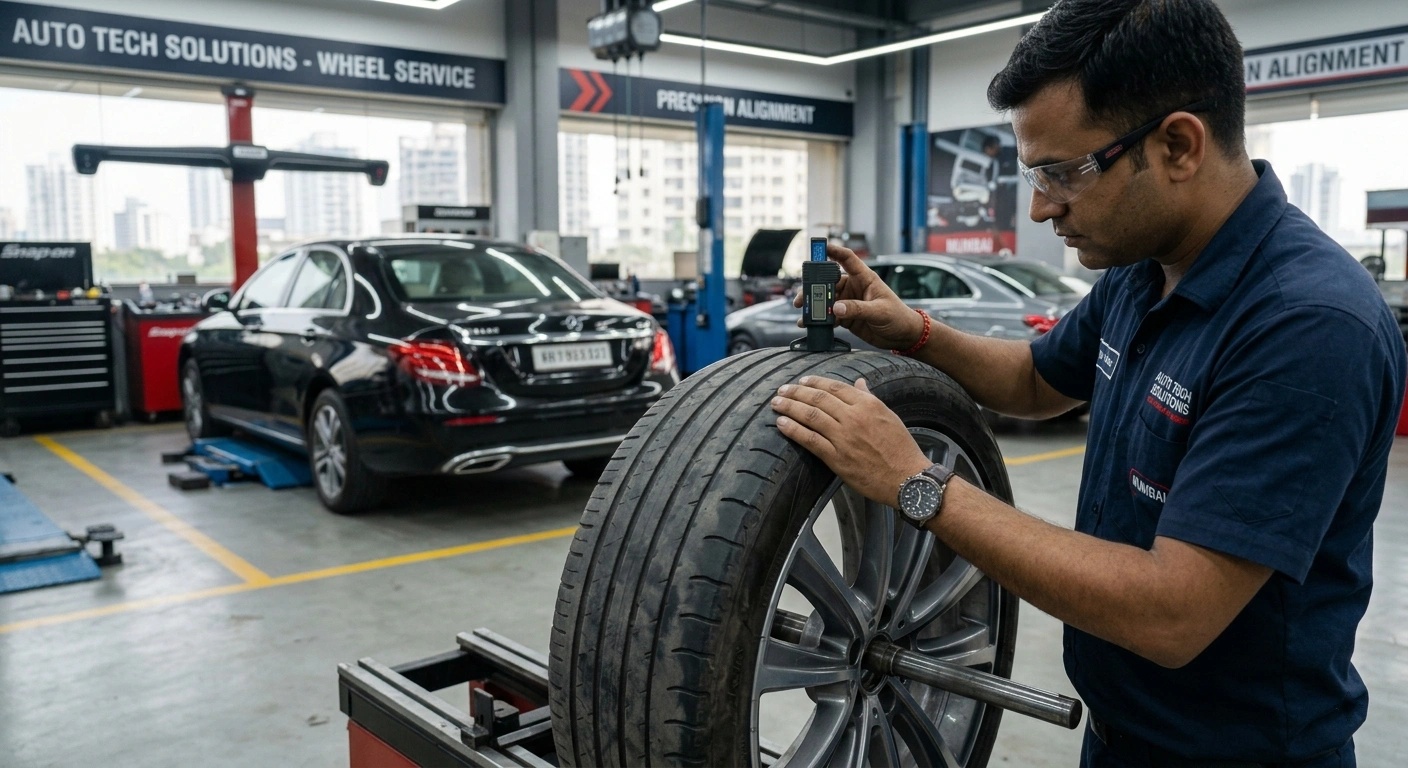
How Is Alloy Wheel Runout Measured?
Runout is not something that should be judged only by looking at a stationary wheel.
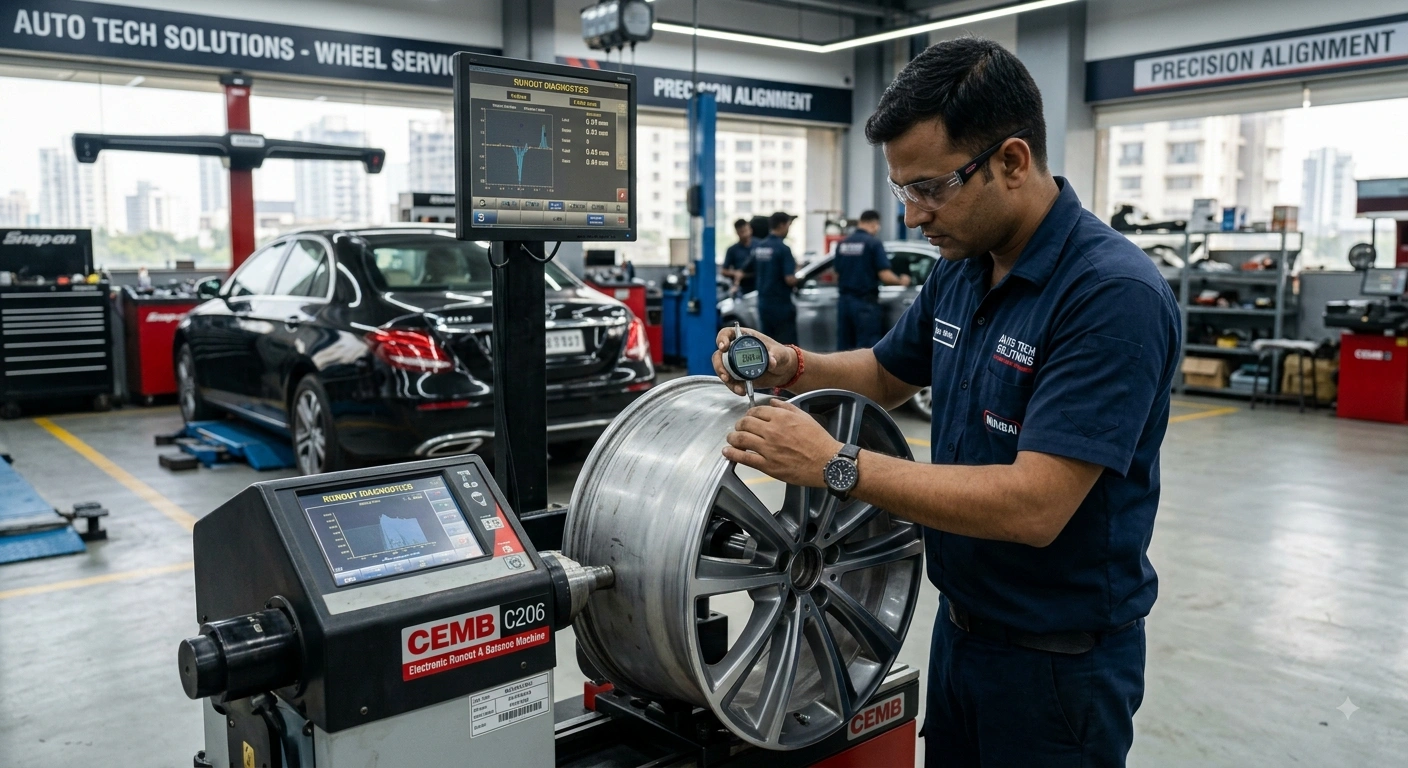
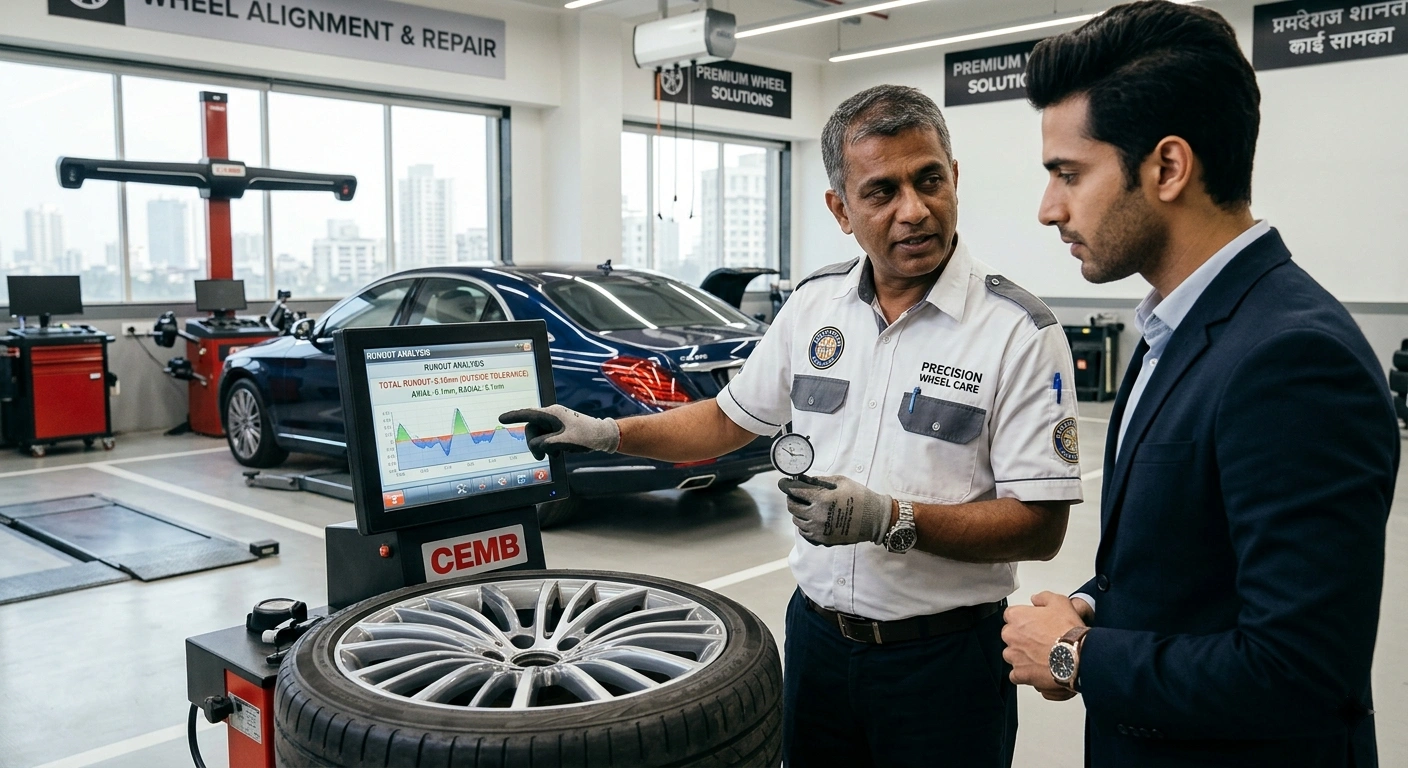
Professional inspection equipment can measure how much the wheel deviates while rotating.
A typical inspection may involve:
- Removing the wheel if necessary.
- Inspecting the wheel and tyre for visible damage.
- Mounting the wheel on appropriate equipment.
- Rotating the wheel.
- Measuring radial movement.
- Measuring lateral movement.
- Comparing the results with applicable specifications.
- Checking whether the tyre is correctly seated.
- Determining whether repair, balancing, or further diagnosis is required.
This measurement-based approach makes Alloy Wheel Runout in Mumbai easier to diagnose accurately.
Wheel runout is measured by rotating the wheel and using precision equipment to identify radial and lateral deviation.
Can Wheel Balancing Fix Alloy Wheel Runout?
This is a common question, and the answer depends on the actual problem.
Wheel balancing and wheel runout are not the same thing.
Balancing corrects uneven weight distribution in the wheel and tyre assembly.
Runout relates to physical deviation in the shape or rotation of the wheel or tyre.
If the wheel is physically bent, adding balancing weights may not correct the underlying deformation.
However, vibration can sometimes be caused by imbalance rather than runout.
Therefore, if balancing has already been performed but vibration remains, further inspection may be necessary.
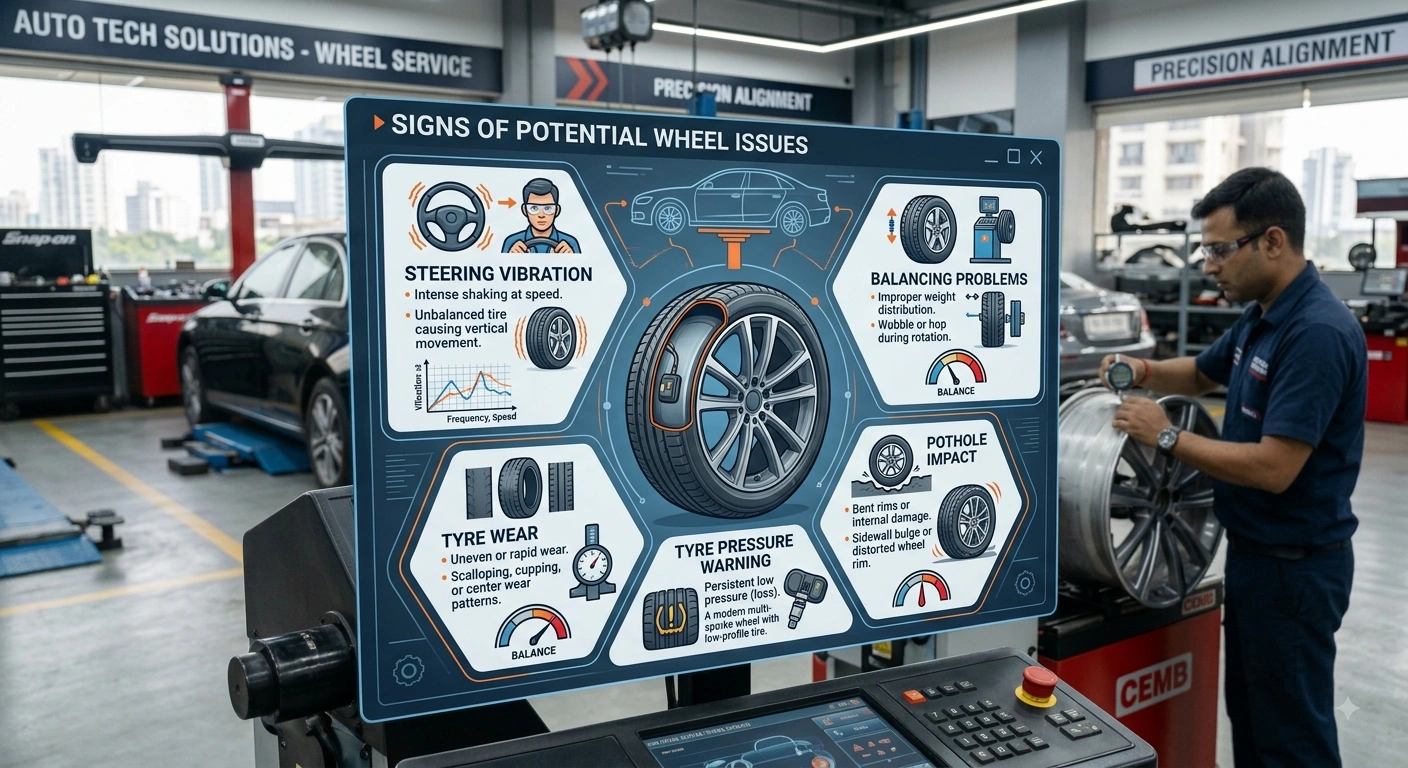
Signs Your Alloy Wheel May Have Excessive Runout
Watch for these symptoms:
Steering Wheel Vibration
Vibration may become noticeable at specific speeds.
Repeated Balancing Issues
If the wheel continues to vibrate after proper balancing, further inspection may be needed.
Uneven Tyre Wear
Irregular tread wear can indicate a wheel, tyre, alignment, or suspension issue.
Recent Pothole Impact
A sudden impact followed by new vibration is a strong reason to inspect the wheel.
Changes in Handling
If your car feels different while cornering or driving at speed, don’t ignore the change.
Tyre Pressure Problems
A damaged wheel or bead-seat area can sometimes contribute to slow air loss.
Why Is Alloy Wheel Runout Important in Mumbai?
Mumbai presents several road conditions that can place stress on wheels.
These include:
- Potholes
- Monsoon waterlogging
- Uneven road surfaces
- Speed breakers
- Road construction
- Heavy traffic
- Kerb impacts
- Sudden braking and manoeuvring
Water-filled potholes can be particularly difficult to judge because the actual depth may not be visible.
After a significant impact, drivers should pay attention to changes in tyre pressure, steering, vibration, and handling.
If new symptoms appear, professional Alloy Wheel Runout in Mumbai inspection can help determine whether wheel deformation is involved.
Can a Bent Alloy Wheel Be Repaired?
In some cases, a bent alloy wheel may be repairable.
However, repairability depends on:
- Type of wheel
- Wheel construction
- Material
- Location of damage
- Severity of deformation
- Presence of cracks
- Structural condition
- Manufacturer considerations
Minor and suitable deformation may sometimes be corrected using specialised equipment.
Severe structural damage may make replacement the safer option.
A professional wheel repair specialist should inspect the wheel before recommending either solution.
Some bent alloy wheels can be professionally repaired, but serious structural damage may require replacement. The decision should be based on inspection rather than appearance alone.
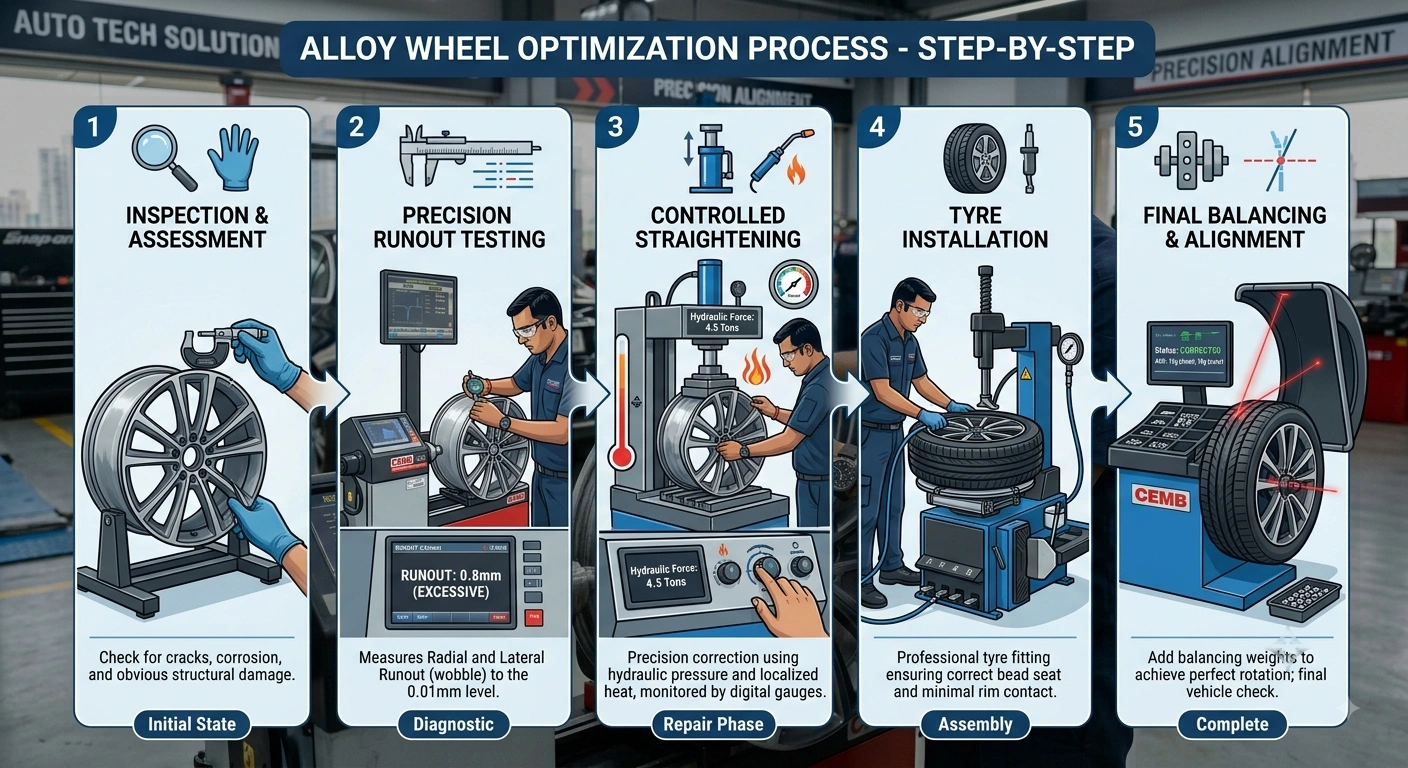
What Is the Typical Wheel Repair Process?
A professional repair process may include several stages.
Step 1: Initial Inspection
The technician checks the wheel and tyre for visible and hidden problems.
Step 2: Tyre Removal
The tyre may be removed if the inner barrel or bead-seat area needs inspection.
Step 3: Runout Testing
The wheel is checked for radial and lateral deviation.
Step 4: Damage Assessment
The technician determines the type and severity of the problem.
Step 5: Controlled Repair
If suitable, specialised equipment is used to restore the wheel’s shape.
Step 6: Final Measurement
The wheel is checked again after repair.
Step 7: Tyre Installation and Balancing
The tyre is reinstalled and the assembly is balanced before returning the wheel to the vehicle.
This process is more reliable than attempting to judge or correct wheel deformation without proper measurement.
Repair or Replace: Which Is the Better Option?
Not every wheel with runout should automatically be repaired.
| Wheel Condition | Possible Approach |
|---|---|
| Minor bend | Professional repair may be possible |
| Slight runout | Inspection and correction may be possible |
| Bead-seat deformation | Detailed assessment required |
| Cosmetic damage only | Refinishing may be considered |
| Severe crack | Replacement may be safer |
| Major structural damage | Replacement generally preferred |
The safest choice depends on the actual wheel condition.
A reputable workshop should prioritise structural integrity and vehicle safety rather than repairing every wheel regardless of its condition.
How to Prevent Alloy Wheel Runout
You cannot eliminate every road hazard, but several habits can reduce the risk.
Maintain Correct Tyre Pressure
Correct tyre pressure helps the tyre absorb road impacts properly.
Slow Down for Potholes
Reducing speed can lower the force transferred through the tyre and wheel.
Avoid Kerbs
Hard kerb impacts can damage the rim edge and wheel structure.
Check Wheels After Strong Impacts
If you hit a pothole hard, look for changes in vibration, steering, and tyre pressure.
Keep Tyres Properly Maintained
Regular tyre inspections can help identify problems before they become more serious.
Address Vibrations Early
Don’t simply become accustomed to a vibration. Investigating it early may prevent additional tyre or suspension problems.
When Should You Get Your Alloy Wheels Inspected?
You should consider professional inspection if:
- Your steering wheel vibrates unexpectedly.
- The vehicle vibrates at certain speeds.
- You recently hit a deep pothole.
- Balancing has not solved the vibration.
- Your tyres are wearing unevenly.
- The vehicle’s handling has changed.
- A tyre repeatedly loses pressure.
- You notice damage around the rim edge.
- The wheel has previously been repaired.
Getting the wheel checked early can help identify whether the issue comes from runout, balancing, tyres, alignment, suspension, or another component.
For drivers searching for Alloy Wheel Runout in Mumbai, professional diagnosis is more useful than relying on visual inspection alone.
Frequently Asked Questions
Q1. What is alloy wheel runout?
Alloy wheel runout is the amount by which a wheel deviates from its intended rotational path while spinning. It can be radial, lateral, or related to other wheel and tyre conditions.
Q2. What causes alloy wheel runout?
Common causes include pothole impacts, kerb hits, accidents, road hazards, previous wheel damage, and deformation. Tyre-related issues can also produce similar symptoms.
Q3. Can alloy wheel runout cause vibration?
Yes. Excessive runout can contribute to steering or vehicle vibration, particularly at certain speeds. However, balancing, tyre, alignment, and suspension issues can cause similar symptoms.
Q4. Can wheel balancing fix runout?
Not necessarily. Balancing addresses uneven weight distribution, while runout involves physical deviation. A wheel with deformation may require separate inspection and repair.
Q5. How is alloy wheel runout checked?
A technician rotates the wheel on suitable inspection equipment and measures radial and lateral movement using precision instruments.
Alloy wheel runout may not always be obvious when you look at your car.
A wheel can appear visually normal while still having measurable radial or lateral deviation. Over time, excessive runout can contribute to vibration, tyre wear, balancing problems, and an uncomfortable driving experience.
For Mumbai drivers, potholes, uneven roads, kerbs, and other road hazards can increase the likelihood of wheel damage.
If your car develops vibration after hitting a pothole, or if balancing does not resolve an ongoing problem, don’t simply assume the issue will disappear.
A professional inspection can determine whether the cause is wheel runout, tyre imbalance, alignment, suspension, or another component.
Author: Areef Shaikh
Last Updated: August 2026
Category: Alloy Wheel Repair & Wheel Balancing
Social Media: Instagram – @wheelsrepairsales